Brett Stanley on the surreal-looking glass of Mexican cenotes, and Ilaria Molinari on the needle and the damage done (for Mermaids)

 Apple Podcasts
 Spotify
 Amazon Music
 Overcast
 Castro
 iHeartRadio
 PocketCasts
 Podchaser
 TuneIn
 Deezer
 RSS Feed
 YouTube
 Welcome to season 3 of the DeeperBlue Podcast! In episode 7:
- The latest scuba diving, freediving, ocean, and diving travel news that has happened in the last week from around the world underwater with Host Stephan Whelan and co-host Linden Wolbert
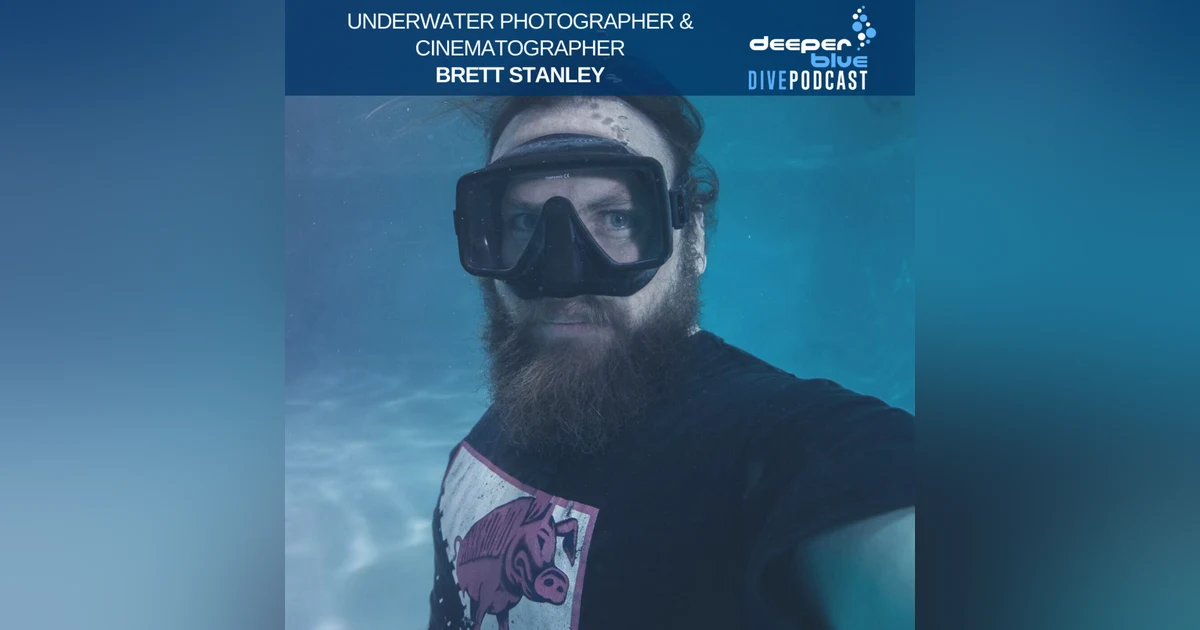
- Then Linden speaks with Brett Stanley, the Australian-born, LA-based Underwater Photographer & Cinematographer famous for his underwater portraits. He talks to Linden about the surreal-looking glass of Mexican cenotes
- We then hear a top tip from Freediver and Mermaid Ilaria Molinari on the needle and the damage done (for Mermaids)
- And then finally we hear another listener-submitted Best Dive Ever from Tom Boyd about freediving with a Manatee mother and calf
If you’d like to be notified when new shows air, please subscribe to the show in your favorite podcast app or head to deeperblue.com/podcast to signup for the newsletter.
Season 3 of the DeeperBlue Podcast is brought to you by Suunto. Finnish engineering pioneering adventure from mountain top to ocean floor since 1936.
Don't forget to give us ★★★★★, leave a review, and tell your friends about us - every share and like really makes a difference!
Season three of the Deeper Blue Podcast is brought to you by Sunto. Finnish engineering, piloting adventure from mountaintop to ocean floor since 1936. Sunto.
SPEAKER_06Welcome to the Deeper Blue Podcast, your weekly guide to everything that's happening around the world underwater. My name is Megan Haney Greer. I'm a free diver, ocean explorer, and the imperfect conservationist. Also co-host of the Deeper Blue Podcast, the podcast for DeeperBlue.com, the world's most popular diving website. Every week, the Deeper Blue Podcast covers everything that is happening in the scuba, free diving, time travel, and ocean advocacy world. So join us as we explore the deeper blue.
SPEAKER_09Welcome back, everyone, to another week of the Deeper Blue podcast. I am Steven. I'm the host of the podcast. And I'm really excited to be joined by Lyndon, one of our co-hosts today to do the news. We'll we'll give you a break from Jason for once.
SPEAKER_08Well, hello there, everybody. It's Sits Mermaid Linden here. Delighted to be reporting the news of this week with Stephen Whelan. Jason, we we miss you.
SPEAKER_09Uh yeah, I know, but he'll be editing this anyway. So he has to listen to us way too much. I do feel sorry for the poor chap, I have to say. But the good thing that I know our listeners will be really pleased to hear is we've incorporated some of Jason's normal tabloids news. So do not fear we'll still have some of Jason's highbrow journalism to cover. Lee, and we've got an especially good one for our specialist poop reporter, Lyndon, later in the uh in the in the in the show. So you've got to keep listening for that. Right, so let's get on with the news. First one is a UK story, actually, and I'm really, really pleased because I know some of the people involved in doing this, but the UK government is moving to ban the import and export of shark fins here in the UK, which is absolutely fabulous news. Um shark finning in the UK has been illegal for quite a while, and this is fantastic because there were all these loopholes that people can bring in quite large amounts of shark product into the country as basically personal allowance, and they're now going to close that. The figures, obviously, that always shock people when I talk to non-divers in particular, somewhere between 100 to 140 million sharks killed every year for predominantly shot fin soup, and those sorts of things, which is just a staggering amount. So, congratulations to the team. I know a lot of people were involved in the UK. Great news for sharks coming out of the UK, which is fantastic.
SPEAKER_08Yes.
SPEAKER_09Onto some less good news, I think, now. NOAA, which is the US National Oceanic and Atmospheric Administration, which I always think is a really cool agency title. Unfortunately, every two years they issue a report which looks at illegal fishing. Came to the fore, particularly last summer, with Chinese fishing fleets off the coast of the Galapagos. Galapagos, which, you know, just hoovering up all sorts of things. And they've issued the latest report, which has identified seven countries for having vessels that have engaged in illegal, unreported, or unregulated fishing activities. Seven countries? That's astounding, really. I just can't believe it.
SPEAKER_08It is. Yeah, China, Costa Rica, Guyana, Mexico, Russia, Senegal, and Taiwan. And this is issued once every two years. Yeah, it's pretty discouraging.
SPEAKER_09It is. The other bit to it also, which which surprised me, is they also identify countries that have kind of the right protocols and regulations to protect against bycatch and fishing operations that are going to be harmful to the environment at the same time. And there are 20 or 30 countries on this list.
SPEAKER_08Yeah, it's it's a pretty long list.
SPEAKER_09Yeah, anyone who's watched C Spiracy as the documentary know that unsustainable fishing is a major, major issue. Importantly identified it. Now the key thing is what do the countries do to try and help protect against this sort of stuff? And we put pressure on the countries to stop doing this sort of illegal activity.
SPEAKER_08Yes. And also, you know, it's always so good to go to the source and say to the consumer, why are you purchasing these things? and educate the consumer about why it's good to not participate in creating the demand. So I think there's a lot more of that happening. And obviously, documentaries like C Spiracy are are making an impact. People are talking about it a lot more than ever. It's a place to start.
SPEAKER_09Absolutely. Talking about places to start, have you ever thought about sleeping underwater, Lyndon?
SPEAKER_08Well, yes. I mean, if I could, I would. And I I do when children ask, where do mermaids sleep? I always tell them in my kelp bed. So there's that. But where else could I sleep?
SPEAKER_09Well, apparently there is a gentleman, a University of Arizona professor, who has invented an underwater portable, inflatable tent, which would allow you essentially to camp underwater, which I think is pretty cool. It's awesome. I I'll be honest, the pictures look a little bit like a very big lift bag. I'm not sure I'm I'm not sure how innovative it really is, because it is really just a big lift bag.
SPEAKER_08But it has beautiful porthole windows. So one could argue that a lift bag is just, you know, usually bright red or yellow or green inside or perhaps black. Whereas this, it it looks like some sort of uh maybe a vulcanized rubber or canvas. I'm not really sure. It's hard to tell the material, but there are some lovely porthole windows that seem to be adorning the sides of the quote unquote underwater tent.
SPEAKER_09It's actually known as the ocean space habitat. It allows you to essentially camp underwater. It was co-invented by Arizona professor Winslow Burlson and professional diver Michael Lombardi, and was featured in a Shark Week episode actually on Discovery Plus.
SPEAKER_08The Great Hammerhead Steak Out.
SPEAKER_09I love it. I love the name. I love the name.
SPEAKER_08Me too.
SPEAKER_09I do remember something similar to this. So our friends over at Fourth Element did they were at one of the tech camps here in the UK, and they had this really cool thing, similar thought sort of thing, which was an underwater shop they opened in this case. So if you go down and go and buy one of their t-shirts that you could only buy if you actually dive down to like five meters, popped up into this underwater, and in this case it was like a lift bag or something, and you pop up, you'd hand over some cash, and they'd give you a t-shirt sealed in a bag, and then you go up. And so I've seen it done before, not quite to the luxurious levels of portholes and and so on, but it is pretty cool.
SPEAKER_08But did they accept sand dollars? I don't know. I mean, uh the dollar, the bills are gonna get soggy down there. What? They have them in a little a little ziplock, a pelican case. What happened?
SPEAKER_09You know what? I I don't remember. I think they actually accepted credit cards as well. So I think take a credit card down and uh and do it if I remember correctly. But it was uh it was a very, very cool little stunt to go, and it's a similar sort of thing, which is be able to be underwater for a little while. So who knows? We might be able to see whole loads of cities underwater to go and camp down there, go and do, you know, underwater bar, underwater shop, you know. Oh, it sounds amazing. All these things sounds fantastic, right?
SPEAKER_08Oh, I'd be down the boogie down uh beneath the fathoms. If you open up an underwater nightclub, I will be there.
SPEAKER_09The deeper blue nightclub. I like it.
SPEAKER_08Yes, yes.
SPEAKER_09We'll we'll look at it, we'll crowdfund it. How about that? We'll uh we'll do it that way.
SPEAKER_08I mean, I think it would be really neat like off the coast of the Bahamas. So, like go to vertical blue, finish the pump, go get your boogie on in the deeper blue bar and nightclub.
SPEAKER_09I like it. I like it a lot, Lyndon. We've got a good business idea going here. We need to uh we need to convene the co-hosts of the uh the podcast and talk about this extensively, I think.
SPEAKER_08Shell, yes.
SPEAKER_09All right, right. Let's get on to some less Jason-like news and into some more serious stuff. Some news from Malta in the Mediterranean. A new dive center has been opened, which is focused around academic education programs specifically around diving safety, research and medicine, and a focus on sustainability as well. And it's a joint venture between the Institute of Tourism Studies, again, a great name of and uh again are our friends over at Divers Alert Network Europe. So they've collaborated to do this, and it's um 60,000 euro investments, which is about $70,000, and includes top-notch diving and diving safety equipment, which are some of the only ones of their kind on the Maltese Islands, which is a big diving destination, very big diving destination. So I'm really excited by this.
SPEAKER_08It's a place I've always wanted to dive, and the opportunity has not yet presented itself, but it's great to see this. This is awesome.
SPEAKER_09Yeah, and then apparently on the same day, a memorandum of understanding was also signed at the same time with Patty Worldwide to establish a valuable and productive relationship to advance academic studies and credentials within the diving industry, which again is a fantastic joint venture. We need to see more of this sort of stuff. You know, diving industry needs to work together as professionals, all agencies, all types, and do more about advancing our knowledge of the underwater world.
SPEAKER_08Absolutely. If we pull our resources, we all benefit. All right. There's some interesting news out of Israel as well. With the UAE, apparently there's an oil deal that is secretive, which could endanger prized corals off the coast of Alot. This is definitely uh something to keep an eye on because this is apparently some gorgeous, gorgeous reef. Some of the most resilient coral colonies in the world, which are endangered if the secretive oil deal goes goes through.
SPEAKER_09Yeah, well, unfortunately, it's a deal between the Europe-Asia Pipeline Company, which is an Israeli government-owned corporation, and the MedRed Lambridge, which is a joint Israel Emirati venture, and it's gonna sort of tear up a load of the coral to go and install these pipes. Um, not great at all. It is some I've actually never dived a lot at all, but it is one of the premier destinations in the Red Sea to go. Uh, I know everyone kind of knows Egypt and the Sinai and so on, but this is another beautiful part of the Red Sea to go and do. Uh real shame, and we need to keep an eye on it, and we need to use our consumer power to make sure that we let everyone know that this is not something that we agree with.
SPEAKER_08Yeah, absolutely. And I'm sure that there must be people, boots on the ground, advocating uh for protecting those corals. In fact, I have a friend who is a diver and a photographer over there, and I actually am curious to know his take on this and and if there is any any chance of it being stopped at this point or what the odds are. But I'll have to wait and see what happens.
SPEAKER_09Unfortunately, secretive stuff doesn't generally bode very well.
SPEAKER_08True. But how how secretive is it if we've uh published news about it?
SPEAKER_09Who knows? We'll have to wait and see what really comes of this because a lot of this stuff also gets tied up in bureaucracy and those sorts of things. So let's let's see. Let's keep keep an eye on it.
SPEAKER_08Keep our fins crossed for the best.
SPEAKER_09Keep our fins crossed. I love it when you're on here, Lyndon. It's uh all the diving puns come out. I love it.
SPEAKER_08Can't help it. Well, in other news to dive deeper in other news, yes. Let's talk about the Caribbean Cup right now, because in Rowatan, Honduras, there is a competition that's been going on. Actually, 2012, I believe, was the first year. This year we're seeing some wonderful national records dropping after following up past the incredibly decorated vertical blue competition in Dean's Blue Hole. So we're gonna go a little southwest here in the Caribbean over to Roatan. And the really exciting thing for me when I look at some of these records, there's a whole lot of constant wait with BIFENS uh national record activity going on, which is its own kind of new trendy thing. But then additionally, I love that there are local Honduran freedivers participating in this competition and setting new national records for Honduras. I think that that's awesome.
SPEAKER_09There's one lady in particular, Andrea Merlow, local Honduran, who has been setting, I mean, it's not groundbreaking as far as freediving is concerned. You know, they she's setting free immersion records at like 23 meters. But still, Honduras, you know, it's one of the it's one of the things I I've always loved about Esteban and the and the team there trying to put on this competition is they always try to encourage local kids and the local community to get involved around the competition. And it's starting to bear some fruit, right? So people are starting to pay attention, it's getting coverage in the uh in the country, people are starting to look into what this amazing sport of free diving is. And we get more people who interact with the ocean, we get more ocean ambassadors, people who are passionate about helping and protecting the oceans, nothing but good things can come from that.
SPEAKER_08Absolutely. And just bringing a sport that might have been little known or just unexplored, and having, you know, people practicing that sport in a space is one thing. But to have locals really get involved with it and maybe find sponsorship opportunities, bring more tourism into the area in a way that is uninvasive and it's not involving anything that depletes the environmental resources. It's just adding to people experiencing and seeing because the reefs down there are gorgeous. Talk about gorgeous colors and technicolor. I was down there, I judged that competition back in 2012, and it was it was a beautiful, beautiful place to dive.
SPEAKER_09And actually, you know what? So the other thing that I'm really pleased about is both the Honduran Tourism Institute and the host hotel sponsor this competition. So it's the Mayan Princess Beach and Dive Resort, which I'm always envious because that's where the athletes stay. And it's like this four or five-star resort that you can go and stay in. And I'm always jealous. It's uh it's gorgeous. It looks absolutely stunning.
SPEAKER_08The pool is gorgeous. Yeah, everything about it is absolutely lovely. The food was great, the restaurant was great, everyone was so lovely. The worst thing about it is the bugs. That's it. So if you if you have some really good repellent for the gnosiums and the mosquitoes, then you'll be all right.
SPEAKER_09And one final thing, I just want to give a big shout out to Team DB member who is the photographer, official photographer there, Alex St. John. If you go to deeperblue.com and have a look at some of the news items around it, his photography is absolutely amazing. So good job, Alex. Always good to see you taking photos for these competitions.
SPEAKER_08So yes, Alex is so talented and such a nice guy.
SPEAKER_09So before we get to your big story, Linda. Oh, it's my story now. Your big story. Why don't we just give a quick rundown? There's a few sort of travel-related things, I think. So keeping people updated and what the kind of situation is around travel, still a bit kind of up in the air. In fact, we were chatting before coming on air around some travel that you know both of us have tried planned for later in the year and similar difficulty in being able to get in and out of countries and so on. So let's talk about some of the stuff. So the Cayman Islands, let's start with them good news, the Cayman Islands are looking at a six-phase plan at being able to welcome back tourists fully without any quarantines or challenges by January 2022. So limited tourism begins on September the 9th, and quarantine restrictions will be removed for fully vaccinated travellers by October the 14th, which is fantastic news. Um always good to hear tourism and Cayman, yeah, Cayman, big big diving resort for the US market as well. So uh another option outside the country to be able to go and travel to, which is fantastic. Absolutely. Tonga, Tonga have announced a compulsory vaccination policy. Great for the local people. I think getting compulsory vaccines is is great. You know, help squash the big C19 to a small C19. And they're getting AstraZeneca shipped in from Australia. Back to the Caribbean or the Caribbean, as some of my co-hosts describe it.
SPEAKER_08I I oscillate.
SPEAKER_09Oscillate. Good. They've announced some new entry rules. So PCR tests for travelers must be completed within 48 hours before departure. Unvaccinated and those not fully vaccinated from high-risk countries must take an anti-gen test immediately upon arrival, which is good. I think this is this is probably going to be for a little while, for a little bit longer. This is the sort of thing we'll start seeing more of, which is countries allowing vaccinated, fully vaccinated travelers a bit more flexibility, or you can go into an exit country based on her getting a test just before you travel, just after you travel, type thing.
SPEAKER_08Yeah, I'm looking forward to getting back down to Bon Air. I haven't been there in in some time, but Gabby Contreras, who runs the Bon Air Mermaid School, is getting things going down there again. And I know uh she's got some some awesome things kicking, as it were. So I'm looking forward to uh hopefully going down there again at some point in the not so distant future.
SPEAKER_09So well, those new rules should uh absolutely help you out on that one. And then a couple of lockdown bits. So Fiji, beautiful Fiji, love Fiji. Uh went diving there a few years ago. They are refusing to impose a lockdown to exploding case numbers. Which is uh I know they've been hit really hard, Fiji. So they're really struggling with all this the stuff they had. They were doing really well now. They've um they've they're really struggling. And then um French Polynesia has gone back into lockdown. Looks like they're in a second wave, which is you know sad news. So I think they'll be off the cards for any travel and diving for a little while, which is Yeah, what a shame. But a mixed bit of news there.
SPEAKER_08It's it's definitely it's up and down and seems constantly changed. Every time I look at the news, there they're different. And with all of the funny little islands that we divers travel to, it's hard to keep track of it all. So, you know, make sure that this episode you're listening to is the most recent news. And uh and check check wherever you're traveling to. But wherever you are going, we wish you safe travels and beautiful diving. And this brings us to our um tail end, as it were, of our islands.
SPEAKER_09Coming live from the Deeper Blue podcast, we have a urgent, an urgent poop story to cover.
SPEAKER_08But is it is it an urchin poop story? Not really. But it's it we could one could say it is. You know, it it's interesting. We came upon a story here that Ramoras, Ramora fish, which are the fish that typically will suction cup onto a larger fish, hoping to gain the scraps of food and its wake after it eats something like a shark or a a large manta. Ramora fish sometimes try to swim, apparently, into whale sharks' butts when they poop. This this is apparently a thing I was unaware of. But whale sharks are the world's biggest fish, so I imagine you you could try to swim right inside.
SPEAKER_09Uh I love the story. So this story was on uh IFL Science, which is a great website if you ever uh go and have a look at it. So, yes, this story is not something we typically cover on deeperbaloo.com, the boring news, as Jason calls it, the real diving news. I love the way they describe it. Whale sharks are dealing with a pain in the butt in the form of fish that's trying to rush into their poop chute whenever they try and take a dump. I love it. Highbrow journalism. And for our regular listeners, you can take one guess who submitted this story uh into the highbrow journalistic. He's not here, he's not here, and he does all the production of this podcast. So, Jason, this one was for you, buddy. We won't reveal that Lyndon and I felt this was an important tail end of the show, right?
SPEAKER_08Yes. Yes, despite weighing up to 20.6 tons, whale sharks do roam the ocean, scooping up all kinds of creatures, and then yes, these little predators hanging out on them just want even more. They just swim right up the keyster.
SPEAKER_09Uh the one thing I do have to say about this is Remoras are very good cleaners. They are so they're good at helping clean fish. So maybe it's it's maybe it's like an underwater b day type thing, you know.
SPEAKER_08That's maybe the uh a little Ramora Ramora enema.
SPEAKER_09Yeah. Oh well, we we shall uh we'll have to keep a close eye on this story and see how it develops over time. I think that'll be uh let's see.
SPEAKER_08Uh I think what we need really is is a uh like a Ramora cam.
SPEAKER_09The Ramora cam. Oh no, do you be what you don't want to uh like a GoPro stuck to their heads? But you get too much detail. I think we don't want to see that.
SPEAKER_08Fair enough.
SPEAKER_09That wraps up this week for for the news. Thank you to wonderful Lyndon joining us today for the news.
SPEAKER_08It's been a delight. And sheer delight.
SPEAKER_09Thank you as always. Yes. And obviously, all the diving, diving travel, and ocean news that you want, head to deeperblue.com, check it out, and make sure you subscribe to our newsletter to get that uh regular. I tell you what, want to get on with the rest of the show.
SPEAKER_08I think that sounds like a plan.
SPEAKER_09Thanks, Lyndon.
SPEAKER_08Thank you, Steven.
SPEAKER_01The world underwater every week. I'm Rama Jermanson from Fourth Element, and this is the Deeper Blue Podcast.
SPEAKER_08Mermaids, storybook characters, circus performers, and models and robed in couture fashions, the underwater work of Brett Stanley is truly ethereal. Brett, it's a joy to speak with you today. And I'm so curious, if someone had told you when you were a kid growing up in Australia that you'd move to Los Angeles, start building elaborate underwater sets and making a living photographing models and mermaid tales in the ocean, would you have believed it?
SPEAKER_03Uh depending on what age it was, but yeah, probably. Not because I had any kind of goals, but because I just loved the water when I was growing up. I was just a water baby. I would spend every waking moment either in the ocean or in our swimming pool. So the idea of me doing what I'm doing now is looking back, a dream come true.
SPEAKER_08I believe you got involved in underwater photography around 2013. Is that right?
SPEAKER_03Yeah, it was around then. I was living in New Zealand and as a commercial photographer, I was trying to find a new kind of style or a niche because you know New Zealand's quite small and and a lot of the work was already being taken up by a small group of photographers in the commercial world. And I found an old point and shoot underwater camera that I had in storage, and a little kind of half a light bulb went on, and I jumped in a pool with a friend of mine, and I thought, I wonder if I can do what I do in the dry studio, but underwater. And it kind of clicked. I took this little point and shoot, which I think was like a four megapixel thing, and I think I had a flashlight instead of a strobe, and we just took some shots and it kind of started the whole journey.
SPEAKER_08When you took those first photographs and looked at Them. How did that feel when you saw those first photographs?
SPEAKER_03It was really encouraging because I'd always been fascinated by underwater imagery and movies. And and I'm not the type of person who particularly likes taking pictures of fish and coral. So being able to see what I'd seen in the movies, like the big blue and the abyss, and then being able to see on my little point and shoot camera something similar to that was mind-blowing to me. And it opened this well inside me of things that I wanted to do.
SPEAKER_08And do you prefer, I believe, to photograph and film mostly on breath hold as well? Is that right?
SPEAKER_03Yeah, yeah. I I much prefer being on breath hold or free diving with my models just because I like to be in sync with them. So if they're in cold water and having to hold their breath without a wetsuit on, then I will do that as well. I like to have the ability to direct them above the water. And if I'm on scuba, I you kind of have the tendency to stay under a bit longer than you would if you're on breath hold. So waiting at the bottom of the pool for my talent to come down and keep doing their stuff over and over is a little frustrating to me. I like to come up and give them direction. So the breath hold just makes that a lot easier because I'm not dragging a tank around with me.
SPEAKER_08I would love you to take us on an underwater journey with you. If there's an experience that you recall that just uh captures the essence of the magic that you experience in the ocean or just in the underwater world, what would that be for you?
SPEAKER_03So it's not the ocean, but it's the Florida Springs. I had no idea these freshwater springs existed until I moved to the States. And I got the chance to go down there a few years ago. To swim in that crystal clear water was mind-blowing. These chasms and cracks and swim throughs, and the water is like glass. And for a photographer, this is a perfect storm of wonderfulness. Because you get these crisp, sharp shots, but you have these amazing landscapes. And for me, all I needed to do was put a person in there and direct them to make the most of the space. It opened up a whole world of trips for me. Because I think I have this passion for crystal clear, fresh water that comes from under the ground. The cenote's were just another level. It was so surreal, shooting in these caverns and these overhead environments where it was so beautiful and old and so silent. Being in those structures under the water. Having a set like that already built was just amazing. It just made my life so much simpler, and it was things that I could never imagine.
SPEAKER_05You're listening to the world's only weekly podcast for scuba diving, freediving, dive travel, and ocean advocacy. I'm Autumn Blum, I'm a rebreather diver, the founder's dream to see. And this is the Deeper Blue Podcast.
SPEAKER_04Season three of the Deeper Blue Podcast is brought to you by Cunto.
SPEAKER_09Oh, I've missed doing this, Jason. So yeah, listen, you know, it's absolutely amazing. We had the conversation with Cunto when we were off on a break, obviously stunning ourselves on beaches somewhere, smoking cigars, drinking mimosas in between podcast seasons. And Cunto so grateful for this, and I know you are too, Jason, that they believe so much in what we're doing that they came back and they are sponsoring this season, and actually they're sponsoring next season as well. Huge, huge thanks to all the team at Cunto for all the faith and belief they have in what we're doing.
SPEAKER_04Yeah, in a time that the entire world shut down and the dive industry in particular was hit very, very hard. So there was not a lot of incoming coming in. Sunto sponsored us, carried this podcast through those times. So we just want to say a very heartfelt thanks. It's a company that we actually very much believe in, and I think that's indicative of where they put their money. Very much appreciated. And we just want to say a big heartfelt thanks to Cunto. And if you're fans of the show, then support the show by supporting Cinto. So thank you, Cinto.
SPEAKER_09Thanks, Centuri.
SPEAKER_07Hi, my name is Julie Rife. I am a mother, a spearfisher. I work at Rife International. And you are listening to the best 30 Minutes About Diving, the Deeper Blue Podcast.
SPEAKER_08This is Alaria Molinari's top tip.
SPEAKER_00This is Ilaria Molinari, and I'm the official mermaid and female ambassador of Y4K with the deepest thermal water pool in the world. And my top tip for mermaids and pre-diving mermaids is don't ever forget teaching equipment. So it would it can happen before a show or before a performance as a mermaid that your tail has some little problems and so it's better to have your teaching equipment and good friends who can help you because you alone sometimes I do it alone. It's my tail, and it's not funny when you are half in the water with the thread in your mouth and the meal in your hands. Not funny at all with the tail on. So good friends are always important, even in the water, especially in the water.
SPEAKER_08Yeah, every mermaid knows how important it is to have good wranglers and assistants to help move you around when you can't walk and help if there's ever a wardrobe malfunction. Excellent top tip. Thank you so much, Helena. Finally, in every episode, we share a story from you, the dive community, where we ask you to tell us about your best dive ever.
SPEAKER_02I am Tom Boyd, an unwater cinematographer based on the Big Island of Hawaii. I was free diving in Crystal River at King Spring, filming Amanda Tee Mother and Calf. The pair seemed comfortable being with me, and after a while, the calf was alone with me and was close to the entrance of the main spring. Some divers were coming out of the spring and saw the calf and moved toward it. The calf turned and looked at me and made a beeline to me and kept me as a barrier from the diver, who didn't appear pleased with that at all. Anyway, the calf and I swam together for a little longer until the mother came back. I think as someone who loves the water, and any time making a connection with a wild marine animal is really something special. I will always cherish that dive and the brief pond I made.
SPEAKER_08We'd love to hear about your best dive. So please head over to deeperblue.com/slash best dive ever to share your story about your best dive ever.
SPEAKER_06Thanks for listening to the Deeper Blue Podcast. Find out more about all the stories you've heard today, plus connect with the world's largest dive community at deeperblue.com. If you like what you've heard, please share, like, and rate our show wherever you get your podcasts. These shares and likes really do make a difference. Thanks so much. We'll see you next week. MHG out