PADI Exec Mark Caney On How A Dolphin Inspired Him To Write A Novel, And Our First Lockdown Best Dive Ever!


 Apple Podcasts
 Spotify
 Amazon Music
 Overcast
 Castro
 iHeartRadio
 PocketCasts
 Podchaser
 TuneIn
 Deezer
 RSS Feed
 YouTube
 In Episode 21, you'll hear the latest news in the last week from around the world underwater including a new line of t-shirts and hoodies from our friends over at Fourth Element, and Divers Alert Network Europe launching their #divelocal and #divesafe campaign to encourage and support us going diving locally during this different times.
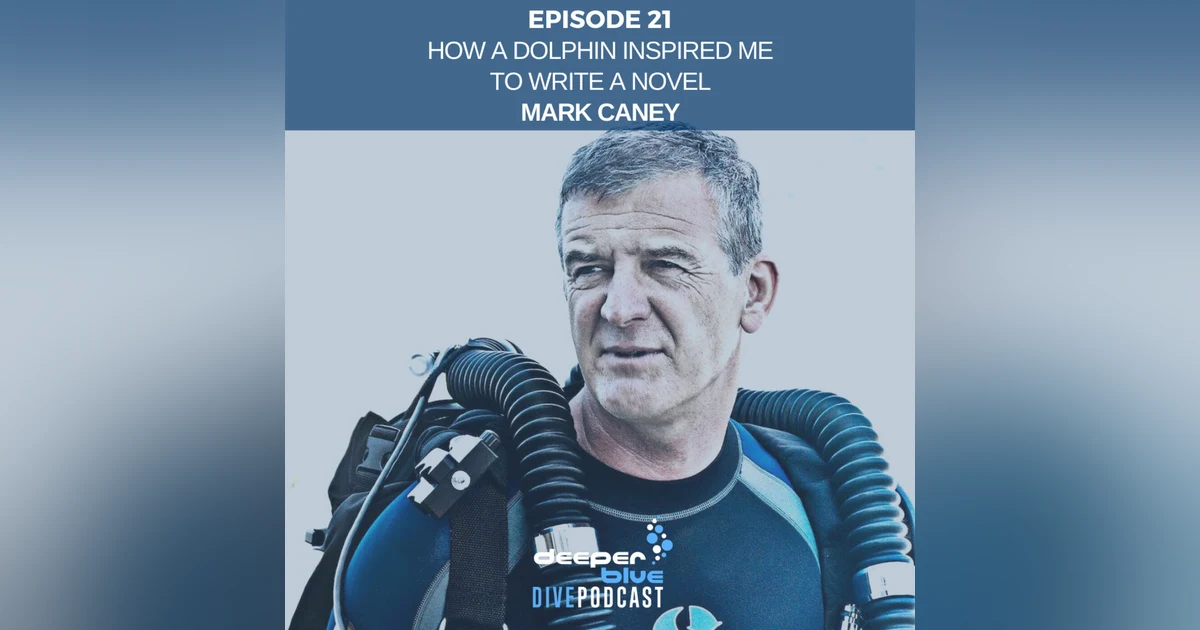
Then co-host Linden Wolbert sits down with Mark Caney - PADI Executive and the global lead of Project Aware. Mark talks about some of his epic dive experiences including one in the Red Sea so profound, he wrote a whole book about it!
We then hear from Paul Strike, or Strikey to many in the dive industry, as he shares his Top Tip for new divers about not succumbing to pressure or chasing those depths numbers.
And then finally we hear from Ben Lockie on his Best Dive Ever.
The DeeperBlue Podcast is brought to you by Suunto. Finnish engineering pioneering adventure from mountain top to ocean floor since 1936.
Don't forget to give us ★★★★★, leave a review, and tell your friends about us - every share and like really makes a difference!
The Deeper Blue Podcast is brought to you by Sunto, Finnish Engineering Pioneering Adventure from Mountaintop to Ocean Floor since 1936. Sunto. Welcome to the Deeper Blue Podcast, your weekly guide to everything that is happening around the world underwater. My name is Stephen Whelan. I'm the founder of Deeperblue.com, the world's most popular diving website. Every week, the Deeper Blue Podcast covers everything that's happening in the scuba diving, freediving, diving travel, and ocean advocates world. So join us as we explore the Deeper Blue. Welcome everyone to episode 21 of the Deeper Blue Podcast. Coming up today, we've got all the latest news in the last week from around the world underwater. Then co-host Lyndon Walbert sits down with Mark Caney, a paddy executive and the global lead for their Project Aware initiative. Mark talks about some of his epic dive experiences, including one in the Red Sea that was so profound he wrote a whole book about it. We then hear from Fourth Element co-founder Paul Strike, or Strikey, as many of us in the dive industry know him, as he shares his top tip for new divers about not succumbing to pressure or chasing those depth numbers. And finally, we hear from Ben Lockhey on his best dive ever. Right, so let's dive straight into this week's diving and ocean news. In a scientific first, scientists from the Schmidt Ocean Institute have explored some of the Great Barrier Reef Marine Park's deepest parts. To conduct the research at a depth of 1,820 metres, that's 5,971 feet. The team has used a remote submersible called the Subbastian. The team was surprised and thrilled with their findings and the wildlife at such extreme depths. Among the more unusual findings on the expedition was a new species of black coral with meter-long tentacles and a rhinopius agriloba, which would typically be found in the waters around Hawaii. Scientists hope that their research will shine a light on the habitat and how seabed features interact with the animals around them. There's a fantastic video of what they found around this deep reef on the news item at deeperblue.com. Now, Stream2Z, which uh sets the global standard for reef safe sunscreens, is the first brand to officially join Shark Allies Shark-free product campaign. As we've mentioned before on the podcast, over three million sharks a year are killed for an oil called squalene that comes from their livers. It's amazing that unless a label clearly identifies a source of a squalene, there's a good chance that it comes from sharks because it can be less expensive than squalene derived from other sources, such as olives, for example. As the case with a lot of skincare products, labels can be really quite misleading. So the goal of the Shark Allies shark-free product campaign is to educate consumers who typically have no idea where ingredients in their skincare products come from. Starting this month, Stream2C products and containing squalene will be flying the shark-free flag. And additionally, Stream2C will contribute 20% of their website squaline sales through the end of the year to support the educational campaign. The Divers Alert Network Europe has launched a new multifaceted campaign to encourage, celebrate, and support local diving in response to the COVID-19 pandemic, which, as we all know, has greatly restricted our ability to go diving and travel internationally. This follows on from similar campaigns earlier in the year by brands such as Hewish, Fourth Element agencies such as Dan and BZAC. So Dan Europe is very much now joining these fantastic brands and promoting local diving. Identified by the hashtags Dive Local and DiveSafe, the campaign, which kicked off with a new feature in Dan's Alert Diver magazine, is meant to help local dive centers and their clients rediscover and get the most out of their local diving sites. Dan Europe says it's also working on new insurance products with the intent of meeting the evolving needs of the diving community, particularly now the emphasis on local diving and reflecting the ever-changing situation in the market. The insurance will supplement divers national healthcare system coverages, which generally do not provide the specialized knowledge and assistance required for diving injuries or fully cover hypervaric therapy, although details of this new plan will be announced soon. We totally applaud and support the initiative by Dan, and moving to a more local diving need is very much going to be the case as we continue to stay local near to our homes for the foreseeable future. A little bit more Dan news this time coming from the international portion of Dan. So Dan and our World Underwater Scholarship Society, that's the organization that runs the Fantastic Rolex Scholar program, have announced two new internships for 2021. The first internship available is a Dan Diver Safety internship. This program focuses on teaching the recipient the various aspects of Dan's risk management and dive safety protocols. With such a broad scope, the internship can then be personalised to focus on the main areas that are interest of the intern. The second internship open to applicants is the Dr. Glenn H. Egstrom Dan Divers Health Safety Internship. That's a bit of a tongue teaser, I have to say. Egstrom actually is one of the founders of the society, and amongst his many achievements is his dedication to diver safety by focusing on the divers' physical conditioning. With this in mind, the internship focuses on the health and safety of divers, and the intern will take part in a wide range of activities related to research conducted by Dan in the area. Both internships are open for applicants right now, and the deadline is January the 15th, 2021. Paddy announced that they were teaming up with GoPro for the first ever underwater selfie day that happened on November the 7th, 2020. The main objective of the event, aside from having some fun, was to bring conservation back to the forefront of social media. The organizations hope that by flooding social media with pictures taken in stunning marine environments will help raise awareness about marine conservation issues. It was dead easy to take part. All you need to do is post a selfie video or photo to social media like Facebook, Instagram, or Twitter. And that was, as I said, on November the 7th. So you can go and find out all these different photos by tagging Patty or GoPro, going to look at their websites and their social media, or looking for the hashtag underwater selfie day. The participants were in for not only having some fun, but also standing the chance to win $2,000 and a GoPro Hero 9 black camera. Talking about Fourth Elements, our friends over there have launched a new line of t-shirts and hoodies with updated designs and styles as part of their brand new winter collection. In the Fourth Elements men's range, the company has incorporated some more heavyweight relaxed styles and the addition of things like a pocket design and certainly my favourite style, which is a polo shirt. I personally have always loved Fourth Element clothing and I have loads of it. And it sounds like whilst we've all been eating probably a few more pies than we probably wanted during lockdown, they've gone ahead and listened to some feedback and created this new relaxed fit. You'll also find that they've introduced new colours and textures, all with the aim of keeping the range fresh and modern. On the women's side, they are offering designs that can be worn beyond just a diving environment. As with each of the fourth elements lifestyle collections, the company designs are printed on water-based inks that are free from harmful chemicals and therefore more gentle on the environment. Each t-shirt in this collection is made from 100% organic cotton, traceable from farm to factory, GMO-free, and grown without the use of chemicals. Finally, there are a few things that are more saddening than watching acute seal pup tangled in marine debris. This is the point where members of Ocean Conservation Nambia stepped in to rescue hapless pups from their plight. The volunteers' latest efforts can be seen in a recently released video filmed at Pelican Point in Nambia. Members can be seen helping several pups that were entangled. And according to the description in the video, the first pup had lacerations around his neck due to a nylon line, and the second seal pup fortunately managed to escape unscathed despite also being tangled in plastic. Now, whilst that is a sad story, the pups in this video, particularly the second one, did dial up the cuteness factor to 11 since he developed a real fondness for the rescuer's seal catching net. It took a little time for him to decide to leave his happy net and go and rejoin his buddies. And uh you can uh finish the week and watch this heartening and lovely video if you head to the news item on deeperblue.com. That's it for the news this week. Remember, you can catch up on all the latest news and happenings from around the world underwater by heading to deeperblue.com or checking us out on Facebook, Instagram, or Twitter. And finally, if you like what you've heard, please subscribe, like and comment wherever you hear your podcasts. And if you have someone that you think might like to listen to this podcast, please drop them a link and let them know about the podcast on all your favourite podcast platforms or direct them to deeperblue.com slash podcasts.
SPEAKER_03You're listening to the world's only weekly podcast for scuba diving, free diving, dive travel, and ocean advocacy. I'm Liz Parkinson, a shark conservationist and underwater stunt woman. And this is the Deeper Blue Podcast.
SPEAKER_02Hi, this is Jason Elias, producer of the Deeper Blue Podcast. Today, our wonderful co-host Lyndon Wolbert speaks with Mark Caney, Patty executive and the lead of their Project Aware. Mark speaks about an incredible experience he had in the Red Sea, so profound, he wrote a book about it.
SPEAKER_01I'm speaking today with Mark Caney, a man whose diving and aquatic experience is as varied as it is impressive. While serving in the British Intelligence Corps to leading dive expeditions in East Africa and beyond, Mark found himself as a vice president of Patty, now in a global role, while also being appointed chairman of Project Aware. He loves being under and on the sea. Perhaps one of his biggest and most personal accomplishments is authoring the novel Dolphin Way, Rise of the Guardians. Mark, thank you so much for joining us today. I would love to hear a little bit more about your connection with the oceans.
SPEAKER_06Hi, Lyndon. Thank you for inviting me. My first connection with the water was not as glamorous as for many people. When I was about seven years old, I was walking through the fields in my native Somerset, England, and came across a horse trough, big metal tank full of water. I looked in there and I could see things moving in it. I'd been watching Jack Ku's still on the TV in the previous days and ran back to my house, got two glass jam jars, brought them back, put them on my eyes, and then lowered them into the water. And there under the water I could see an amazing underwater world. Things actually living, moving. And that was when I first thought I have to go down there and see that one day.
SPEAKER_01I love that story. It is such a quintessential childhood moment of seeing the smallest things at macro scale and then realizing there's a bigger world out there. The Dolphin Way, your book, is amazing. I I purchased and read a copy of it when it first came out. Can you share a little bit about that?
SPEAKER_06Well, that came out of a particular experience I had. And it's always impressive to have any kind of interaction with a marine creature, a big creature that's perhaps as intelligent as we are, and to have that kind of connection is fantastic. And as I say, that's what got me looking at the intelligence of dolphins, the society, the culture and everything else they have. And I started to realize they probably are the next most intelligent creature on the planet, quite possibly on a par with us. And if you think about it, if you were from another universe and you came to Earth and you were looking for the most intelligent life form, would you choose the one which had messed up its environment and constantly had wars? Or would you choose the one that had got a way of living for a sustainable manner for the rest of its existence? So we could learn a lot from the way dolphins live. And that's what made me want to write the book. A, to tell a story, but also B to show the problems we have in the ocean and what solutions might be. So I was once in the Red Sea and heard of a wild dolphin that was hanging around a particular bay. I went there with a couple of friends, and because of the vagaries of getting around in Egypt, getting stuck in the sand, we didn't arrive until late at night. Although it was dark, it was middle of summer, so very hot, and it was a calm sea, the moon was up, and it was sandy bottom, so it looked beautiful in the water, and I thought, yeah, let's go out anyway. So all of us went out, the three of us, and I knocked a couple of rocks together in the hope of getting the dolphin's attention, and it did come and it was swimming around on the edge of visibility. Eventually the other two people went in. I stayed, and then the dolphin became more and more interested and got closer and closer to the point in the end where it obviously wanted to be touched and to actually have contact with me. And we spent hours together, and it was a magical time because the sea was flat, calm, sandy bottom, full moon above. And there am I with this wild creature that obviously wants human company. And when you look a dolphin in the eye, you see another sentient being. And that for me was a real connection. I mean, I came out, I was in love with the dolphin, it was amazing. I can't really put it into words. I don't think it's telepathy, but looking into a dolphin's eyes really close up like that, you really felt a connection between minds, in the sense that I was looking into her eyes in the same way I can look into your eyes, I can see another intelligence looking back. It's it's not the flat glassiness that you'll get when you look into a fish's eye or a turtle's eye. This was obviously a thinking creature with emotions, with feelings that you could immediately interrelate with. It was my best time ever underwater, and I started then researching dolphins and deliberately trying to find more opportunities to spend time with them. And that's what made me write the novel.
SPEAKER_04And you're listening to the best 30 minutes about diving, the deeper blue podcast.
SPEAKER_07Hi everyone, the deeper blue podcast is brought to you by Sunto, the uh makers of those fabulous, fabulous dive computers. I think I sounto. I have to say, you know, Jason, I I um uh you know, I've been watching some of the adverts for uh for Cunto and I just cannot nail the Finnish accent because they're a Finnish company. They have a really it sounds really cool when it's finished.
SPEAKER_02I would try, but people would be like, I think that's more Danish. So I'm so I have another. Wow.
SPEAKER_07So you ever dive with a Cinto before, Jason?
SPEAKER_02It was actually one of my first dive computers for my for my wrist, which was fantastic. And I remember being kind of into it in a huge dial, which was fantastic.
SPEAKER_07Was it a big bright yellow one?
SPEAKER_02No, I don't get anything that's not black. So this one was black.
SPEAKER_07Yeah. Well, that's true. My most diverse, right?
SPEAKER_02That's right. Well, I just dress in black all the time, anyways. But so we're talking here about the Cunto Heritage, which is the so this is the first, not only was it my first dive computer, but they were the first to introduce dive computers profile memory, ascent rate, monitoring, scrollable user menus, backlights, watch sizes, and a compass.
SPEAKER_07Well, you know, the compass thing is really interesting because I'm not sure you know that I didn't actually know this until I I spoke to some of my friends over in Cinto, but they pioneered some of the compass, nothing to do with diving. The guy behind Cunto actually created this, you know, the the compass that floats around in in Liquid. He he pioneered that, and that's where Cinto came from. And um they said Mr. Cinto? Uh Jerry Cinto.
SPEAKER_02Was that Jerry Sinto?
SPEAKER_07It might have been. I'd have to look up his name. That's really terrible about uh not remembering his name, but um it's very it's a very fit.
SPEAKER_02That's okay. I think Jerry, it's Jerry.
SPEAKER_07Very finished name. And that's what he created, and and that's where the the whole company came from. And they they then went beyond that to create all sorts of outdoor activity stuff. And I'll be honest, I've been a Cunto diver for pretty much my whole diving career. I've always had a Cunto uh dive computer attached to my wrist or I did have some air integrated stuff on my regs and stuff before that. But I I you know you probably cut me in half and you it'll probably read Cunto.
SPEAKER_02Right, sure. Well, I gotta say that um uh all all of these things we're talking about, Cunto, the Heritage, that's actually pretty cool. Obviously, I'm a huge fan of history. So the idea of like these were the first people, I believe. Although I gotta say the compass part for me, underwater, I know this is this is sacrilege to say, but I don't need the compass. I just follow the dive master. I'm just looking around at the what's going on around me. I know that's that's terrible to say because I'm a recreational diver. I'm not like uh super hardcore like a lot of the people we talk to on this podcast. Uh so as long as the dive master's compass is working, I'm okay. But everything else, um I but everything else, that's actually really cool. I really I love heritage. I love the idea of the fact that they started this kind of stuff. That's very cool.
SPEAKER_07It is very cool. So listen, I think everyone should go and check out the uh Cinto Heritage stuff on dpaw.com and you know, read some bit more about Cinto because they have very cool backgrounds. Cinto.
SPEAKER_02Today's top tip comes from fourth element co-founder Paul Strike.
SPEAKER_05I would suggest if any little tip that I can give to divers and particularly new divers, is not to feel under any pressure at all to go deep for the sake of it. And I think there sometimes can be that pressure to some extent, saying, well, I've done a 20-meter dive, a 30-meter dive, a 50-meter dive, whatever it is, and to be aware of the fact that often, especially if you're on a coral reef dive, the huge amount of life and the most colourful life is often seen within the first 10 or 15 meters. And I remember a time when I was representing fourth element as a company out in the Caymans, or rather Tech Week, which was a week of technical diving. Obviously, with the deep walls they've got there in the Caymans, fantastic environment for it. But I was most definitely the least qualified diver there by a long, long way in terms of my technical um experience capability. But I can assure you I saw more amazing marine life than anybody else who was diving that week. The amount of life at depth was much less than what I was seeing at around 20 to 30 meters, and some fantastic wildlife and eagle rays and goodness of those what up around the shallows. So certainly there's no need to go deep, and I would say only go deep if you really have a reason to.
SPEAKER_00My name is Ben Loki. I currently reside in Telluride, Colorado. My greatest diving experience was a month ago on an island of Batanis, the northernmost province of the Philippines. I was in lockdown on the island for almost six and a half months. I only intended to be there for a month, so it was so incredibly meaningful because I was the last foreigner and I made a lot of very genuine friendships with the local E Batan culture who taught me how to free dive and spearfish. Mostly the free diving came from our need to spearfish for food. And it's not as much of a luxury as a sport as I see in other parts of the industry, but it really is a necessity. So through that necessity, I went from diving only three meters and maybe holding my breath for 30 seconds to one of my last dives on the island, which was 21 meters and just over a minute 30 to shoot the local Educk fish, which had eluded me up to that point. So it was great to finally shoot the larger fish and really have the companionship of the local Ebatan spear fisherman, which was really what made it so meaningful.
SPEAKER_07We'd love to hear your story about diving. So at the end of the show, you'll find out all the info you need to submit your best dive ever. Thanks for listening to the Deeper Blue Podcast. Find out more on all the stories you've heard this week, plus connect to the world's largest online dive community at deeperblue.com. And if you like what you've heard, please subscribe, like, and comment wherever you hear your podcasts. These comments and subscribes really make a difference. Before we go, I want to give a big shout out to Jason Elias, our producer. In case you didn't know, he has an amazing podcast about people who have a deep connection to our world's oceans. Connections strong enough that they have dedicated some part of their lives to being in or working on behalf of the water. Take a listen when you get a moment to Jason's show, the Big Deep Podcast. Every week, we want to hear your stories and share them with the world. So please record and send in your short story of your best dive ever. Keep it brief, no longer than two minutes, please. And in it, tell us your name and location, where you were on the dive, what happened that make it so great, and why it's meant so much to you. You can get that over to us at bestdive ever at deeper blue dot com, or head to our website podcast.deeperblue dot com forward slash best dive ever. Join us again next week and explore much more of the deeper blue