Bob Talbot on a moment when dolphins fully accepted him, and Isaac Daly on the infamous aqua-bog


 Apple Podcasts
 Spotify
 Amazon Music
 Overcast
 Castro
 iHeartRadio
 PocketCasts
 Podchaser
 TuneIn
 Deezer
 RSS Feed
 YouTube
 Welcome to Season 4 of the DeeperBlue Podcast! In episode 9 you can look forward to:
- The latest scuba diving, freediving, ocean, and diving travel news that has happened in the last week from around the world underwater with host Stephan Whelan and producer Jason Elias.
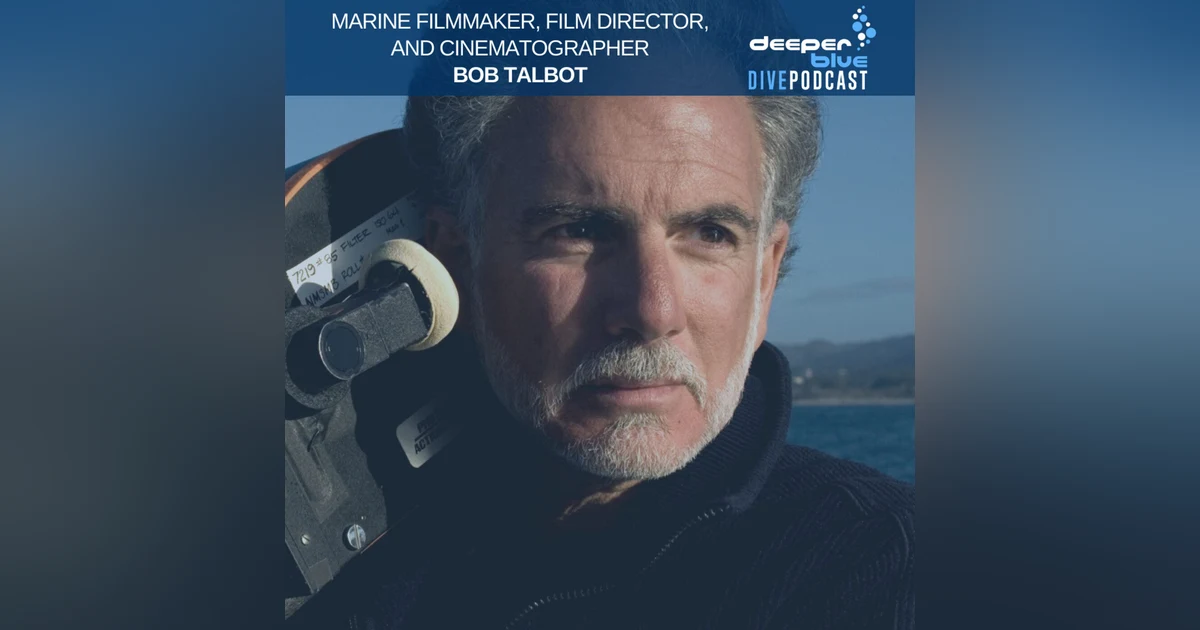
- Then co-host Linden Wolbert speaks with the marine filmmaker, film director, and cinematographer Bob Talbot. They discuss his profound connection to the natural world that led him to work on some of the biggest Hollywood films out there. He also tells us about a moment when a pod of dolphins fully accepted him in Bimini.
- We then hear a top tip from the Founder and Host of Noob Spearo podcast Isaac Daly on the infamous aqua-bog.
- And then finally we hear a listener-submitted Best Dive Ever from Arlette Diederiks who tells her about a magical dive in the Belize Blue Hole.
If you’d like to be notified when new shows air, please subscribe to the show in your favorite podcast app or head to deeperblue.com/podcast to signup for the newsletter.
Season 4 of the DeeperBlue Podcast is brought to you by Suunto. Finnish engineering pioneering adventure from mountain top to ocean floor since 1936.
Don't forget to give us ★★★★★, leave a review, and tell your friends about us - every share and like really makes a difference.
Season four of the Deeper Blue Podcast is brought to you by Sunto. Finnish engineering, pioneering adventure from mountaintop to ocean floor since 1936. Sunto.
SPEAKER_05Welcome to the Deeper Blue Podcast. Your weekly guide to everything that is happening around the world underwater. My name is Jason Leas, and I'm producer of the Deeper Blue Podcast, the podcast for DeeperBlue.com, the world's most popular diving website. Every week, the Deeper Blue Podcast covers everything that is happening in the scuba, free diving, dive travel, and ocean advocacy world. So join us as we explore the deeper blue. Hello, everyone. Welcome back to the Deeper Blue Podcast. My name is Jason Leas, producer of the Deeper Blue Podcast, and I am sitting here with an extremely good-looking man.
SPEAKER_04Steven Whelan, the founder of Deeper Blue and host of the podcast. So welcome back, everyone.
SPEAKER_05Hello, everyone, and hello, Stephen. Well, we have uh some news to get to, so why don't we start?
SPEAKER_04Yeah, great. So uh first story, Core Eye this week, is a story about a really cool underwater drone camera. I actually saw this when it was released back in 2016 at Dima. Um, and it's called the Eye Bubble. It's by a group of French technologists, marine technologists, a company called Notilio Plus. Notilio Plus. And they are great guys. They're almost stereotypically French. They all sit around, they're all stick thin, they all smoke cigarettes and drink express espresso and all that stuff. It's brilliant. I love it. But this camera is an autonomous underwater drone that will follow you around and take video of you. Absolutely amazing technology.
SPEAKER_05Yeah, that's really cool. That's the reason that I like this. It was also used in a movie that came out, I think, last year, called The Deep House, which is an underwater horror movie about a house at the bottom of the lake, but they shot almost the entire movie with this camera as well. So obviously the resolution is high enough to do that.
SPEAKER_04I mean, why would you want to take your own footage? Have an autonomous drone do it. That's what that's what I said.
SPEAKER_05That's exactly right. And as we all know, unless what you do is actually recorded and shown to someone else, it didn't actually happen. So that's why Steven and I have we do a podcast every week just so that we can feel her.
SPEAKER_04Herbert not seen, Jason. Herb is not my scene. That's it. Face radio, face radio.
SPEAKER_05I I will say this as an aside. I'm gonna I work as a commercial photographer, and the first time I sent my website out, the first time ever I sent it to this photo editor, and he said, Have you ever considered writing? So um so next, world's deepest diver cracks the Atacama Trench. So story this week about um Victor Vescovo, I assume one of the billionaires traveling around the world, flying above the world or diving down. Uh, he has completed the first ever crewed submersible to the eight kilometer plus deepest point off the Atacama Trench in South America. You know, we do live in a gilded age where billionaires can take their wildest dreams to fruition, but this is still for us as ocean people, something interesting. Uh he headed down there off Chile's coast and he was doing a bathy metric seabed mapping and collect samples at various depths for an observation system for earthquakes. So that's very cool. But it was also meant that he got to go down, and there's some interesting photos from him in the submersible. So have you ever been in a submarine?
SPEAKER_04Uh not really. It doesn't really appeal to me if I'm being brutally honest. A uh stuck in a tin can. I mean, I'm happy flying at 30,000, 40,000 feet in the air when I put me underwater with one, I'd want to be diving, to be honest with you.
SPEAKER_05Yeah, yeah, same with me. Same with me.
SPEAKER_04So uh but that's pretty amazing. You know, it's um, yeah, the support vessel was the pressure drop by EOS Expedition. I know some of the guys who do EOS expeditions, and I basically I follow them on Instagram. Well, I've met them in person, but I follow them on Instagram, and I'm just insanely jealous all the time about all these cool places they get to go to.
SPEAKER_05Yeah, me too. I gotta say, as much as like uh as much as the I want to crank on another billionaire doing another thing like this, it's also I do find it fascinating and interesting. So next, on to French Polynesia.
SPEAKER_04There has been a massive pristine reef of giant rose-shaped corals that's been discovered lurking unusually deep off the coast of Tahiti. And you know, it's been described this amazing uh discovery of these rose-shaped corals. It's about 1.9 miles, that's three kilometers long. It's between sort of 30 to 65 meters across, 98 to 213 feet, and it's about 31 to 55 meters, 100 to 180 feet deep, which is this is just an amazing thing. They really were not we're expecting to see this at all. And it's this beautiful rose-shaped coral as well, which is amazing.
SPEAKER_05Yeah, there's some beautiful photos in here. And they do say that the depth that it's at, because it's much deeper than most coral reefs that a lot of divers would be used to, uh, is kind of what has helped protect it and keep it so healthy. So the photos are absolutely stunning. Uh, yet another reason to go back to Tahiti for me. I really like the fact that right, we've covered a couple of stories over the last few weeks of discoveries in the ocean. And it just again points to how how much there is to discover and why it's so important to protect.
SPEAKER_04And then uh a follow-on story, actually, uh another marine conservation success story, actually. So, Dr. Sylvia Earl, uh, her deepness, as she is known by many of us in the uh in the diving and ocean worlds, uh, she's been celebrating the fact that the marine protected area around the Galapagos Islands has been expanded and extended, which is fantastic news because the Galapagos obviously is such an amazing ecosystem, and it's unfortunately comes under a lot of pressure from tourism, but also from things like Chinese fishing fleets that have been spotted off the coast of the Galapagos for a number of years and so on. So it expands the protection area by 60,000 square kilometers, and half of it will be fully protected where no activity that can be taking any animal, doing anything that injures or damages any of the ecosystem can be done at all, which is absolutely fantastic news.
SPEAKER_05Yeah, that's great. And it also follows on the heels of the news that we covered earlier in the season, where they have discovered that there is a wildlife thoroughfare running through the Galapagos and that it was somewhat unprotected, particularly from Chinese trawlers. So this is fantastic news for that. The other thing is, is like, you know, the term force of nature can be a lot of people kind of bandy that term around around people that are doing certain things. But Sylvia Earle, I mean, this woman, she's on the level of Jacques Cousteau in terms of how much she's done for the oceans. It's pretty incredible how she continues at her age to do these kind of things. Plus, there's a lot of fun photos of her still diving.
SPEAKER_04Well, Alex Rose, who is one of our guests in season uh one, I think, of the podcast, Sylvia is her mentor, basically. And she talks, it's one of her stories she talks about is on Sylvia's, I can't remember, like 80th birthday or something like that, or 90th birthday or something. Yeah, and she went off diving. Sylvie Sylvia went off diving on her birthday in in the Antarctic, I think it was. That's right. Absolutely amazing woman.
SPEAKER_05Moving on. Travel news of the underwater world. Next, we're going to my favorite part of the show, which is travel news. And this comes from Belize. We have some new uh information about Belize. And the reason I bring this up is because my wife and I are thinking of taking a trip when the Omicron surge fades a little bit, and Belize is on our list, and so this was relevant for us. Now, to head to Belize, there's a number of requirements that you have to do. One of them being you must have travel insurance to visit the country starting in February. It must be official, sanctioned by the Belize Tourism Board, and it has to cover up to $50,000 in COVID-19 related expenses and $2,000 for lodging expenses. There's a number of other things, tests that you have to take, PCR tests you have to take in country, and uh you can't just use at-home kits. So I have to say I very much appreciate the fact that a lot of countries around the world are holding line to make sure that we're safe when we travel.
SPEAKER_04Yeah, absolutely. I mean, Belize beautiful diving at Belize. So uh fantastic that the country's opening up and allowing you to uh to visit. So we're in a bit of the segment of the show, which is the uh the news, which is the uh the snooze fest, as Jason calls it, because it comes from in our list of news stories. I put this as snoozefest or well it's only snooze fest because it's actual diving news as opposed to uh as opposed to the mega mansion stuff that you normally come up with. So this is news that we've already covered when we're doing research on the show. It's stuff we've already covered on deeperblue.com. So we know it's good, valuable news. So the first story is from our friends over at Shearwater. Uh Shearwater produced dive computers. They do produce some absolutely amazing dive computers at that. And one of their most popular models is called the Teric. And they've launched a new edition, which is inspired by old-fashioned dive helmets and tools used by the divers over the years and classic kind of adventure stories and you know, 10,000 leagues under the sea type thing. And it's called the Journeys Edition Teric. It's got this beautiful kind of copper bronze. It does look very cool.
SPEAKER_05I'm very impressed.
SPEAKER_04The Teric itself is still a recreational, technical, and closed circuit CCR, rebreather, and free diving computer. Very, very cool. Look forward to seeing one in real life.
SPEAKER_05Mm-hmm. Then that takes us onto the folding fin, which I think went viral, didn't it?
SPEAKER_04Yeah, this one went proper viral on Deeper Blue. During the day, I have a little screen up which shows me the traffic on the website. And I looked over at one point and I was like, holy moly, what is going on at the moment? And it was a folding fin. So um, there has been announced the world's first folding fin. So this is an innovative design that has all sorts of biomimetic features. Biomimetics about us imitating what's in nature, and it features two rigging arms that can be folded with a membrane between them. So this kind of then folds down.
SPEAKER_05That's amazing.
SPEAKER_04Like a webbing of a frog's foot. And it was initially designed to use by maritime special forces operators uh who wanted to be able to move around without dragging large bulky fins with them, and they can be stowed in small pockets, those sorts of things. And now it's coming out very shortly. So they're taking orders now on their website. So pretty cool stuff.
SPEAKER_05Yeah, that is super cool. I mean, anyone who's ever been diving anywhere in the world and traveled with your gear knows that the fins become a huge pain in the butt trying to get them as you travel around. This is really, really cool. I'm very interested. I mean, I do operate at the level of a Navy SEAL to begin with, so special operations.
SPEAKER_04The thing that I'm most interested in, and I hope the audience heard that, is Jason said that the deeper blue.com story was really cool. So uh so there we go.
SPEAKER_05So maybe I'll just I'll edit that out, but that's I love it. But though I but I there's a link on deeperblue.com to their website, and when you look at what the fins are like, it's really cool. I'm I'm considering putting a pre-order in. I like this. That's really interesting. So very cool.
SPEAKER_04I think Jason's also considering subscribing to the newsletter for deeperblue.com, which might give him this sort of news on a regular basis.
SPEAKER_05I wouldn't go that far.
SPEAKER_04Let's do the last of the serious news, and then I think Jason, you got a special story coming up.
SPEAKER_05So I always do.
SPEAKER_04You do. So Sea Shepherds, the ocean conservation well, non-profit, but they do a lot of they call themselves an interventionist organization.
SPEAKER_05That's what they call them.
SPEAKER_04Yeah, so they so they do, so they do they're a bit marmite, Sea Shepherd. So and not everyone loves what they do. They they they obviously have the Discovery series, whale wars, whale wars, which you know documented them trying to stop the Japanese whaling fleets uh in the southern oceans. Anyway, they do tremendous work and they have a $4.5 million donation from the Age of Union Alliance, and its uh aim is to help fund the operation of a 56-meter, 184-foot vessel to be called the Age of Union for three years, due to be patrolling from uh this year, because Sea Shepherd tend to buy old ships and repurpose them into sort of these intervention vessels to go and support their activities. Uh, and this was really cool. So Sea Shepherd is founded and run by a guy called Captain Paul Watson, and he actually shared the link from the Deeper Blue website. So he doesn't find it boring, Jason. He quite likes deeper blue.com. And if it's good enough for Captain Paul Watson, it's good enough for you.
SPEAKER_05Well, first off, no one's perfect. Second off, I think one of the things that I like about Sea Shepherd, uh, I happen to be a fan of Sea Shepherd. There's a punk aesthetic to it that appeals to me, just tear the church down kind of idea, which is maybe a failing in myself, but I actually really like what they do. Um, I've actually interviewed Paul Watson and I found him to be a super interesting intellectual, very kind and compassionate. I understand why people have issues with what he does or what his organization does. I do. But I think one of the things that I like about at least one aspect is that they he focuses, and this donation is really going towards working with governments worldwide to patrol the oceans and protect them from unregulated fishing. And that's one of the issues on the open ocean, is that there is a lot of unregulated catch going on, which is as much as governments try to protect their own waters, there's so much of the world that is in un in unregulated waters and international waters, or even in waters that are just not patrolled, that's what they work on. So I very much uh appreciate what they're doing here.
SPEAKER_04And before you go any further, Jason, Jason doesn't just do stuff on Deeper Blue. You know, it's it's yeah, he also has a passion because obviously he earns so much money doing this podcast uh for deeper blue, that he has a passion project, which is his own podcast called The Big Deep, which absolutely you should go and listen to, obviously, once you finish listening to this episode.
SPEAKER_05Thank you for the call out. Yeah, I did a whole interview with Paul Watson and uh he was a really interesting guy, so you can find that there. All right, on to our last story.
SPEAKER_04Oh, that's it. That there's no more time to cover anything, Jason. I'm afraid.
SPEAKER_05If I can just get one more thing in, just one more thing. This is not a new story, but I as we've been building out our portfolio of mega mansions and Russian submarines that we can buy, I figured like, but how do we get around, Steven? And I said that to Steven, and Steven said, Well, Jason, there is a car out there that I think might be of interest to you. And it is called the Rin Speed Scuba, SQUA. Now, talk about old news. This was actually um originally conceived of in the Spy Who Loved Me James Bond movie of 1977. But you can actually buy this car, the Rin Speed Scuba. It came out in 2008, and uh it looks exactly like you would expect a sports car to look. It looks kind of Ferrari-ish, kind of Lamborghini-ish, but there are some pictures of you could just drive it right into the ocean and it has tanks attached inside the car, and you can actually, it turns into a submersible. Now, one of the things is that the gallery photos of this show the driver in a tuxedo with a woman next to him who's in a red dress, like she just went to a gala event. You guys can't see Steven. Steven dresses in a tuxedo most of the time.
SPEAKER_04So I think if you're gonna record a podcast and no one can see you, you might as well dress in a tuxedo.
SPEAKER_05But I just wanted to point out that you can buy this Rin Speed Scuba. I'm not quite sure what the price is, but uh, as far as I'm concerned, the more expensive the better. Uh, because if it's gonna sit in front of my mega mansion parked, I gotta get from my mega mansion to my my Russian submarine. This is the car to do it in.
SPEAKER_04So yeah, very true. I mean, you know, the news on the uh on the web of mega mansions and submarines and yachts and stuff is getting a bit thin, obviously. The slowdown is there's there's not as much market, you know. You keep the the market of one of Jason is uh things so uh yeah. I mean it's a very, very cool, it's a very cool uh car. The only thing I'd say about it though is when you look at it, so you'd expect a bit like James Bond that you know the roof would come up and they pressurize the car and so on. But no, it's uh it's an open top car and you've got tanks behind you, and you just sort of whip out some tanks and stick them in your uh you know, uh a regulator in your mouth and off you go.
SPEAKER_05That's exactly right. In fact, I don't see any photos with a roof. So, like, this is a great car if you're gonna go scuba diving, but what if it rains?
SPEAKER_04Well, if if it if a car starts flooding, it's not a problem. You've got the uh regulator and tank to keep you okay.
SPEAKER_05So, anyways, it was just a little fun, something to take our mind off of the problems of the world. So, all right. Well, that that covers the news for the week. Uh, Steven, as usual, good to see you.
SPEAKER_04Good to see you too, Jason. As always, you can go and catch the latest news on the diving and ocean world at deeperblue.com. You can even subscribe to the newsletter should you wish, which obviously Jason is going to do straight after this recording.
SPEAKER_05Why why would you do that?
SPEAKER_04So, other than that, this is our penultimate episode. Next week is our last episode of the season. Be sure to tune in for that one. And in the meantime, let's get on with the show.
SPEAKER_00You're listening to the world's only weekly podcast for scuba diving, free diving, dive travel, and ocean advocacy. I'm Don Carnegus, dive medicine researcher and Nemo21 Aquanaut. And this is the Deeper Blue Podcast.
SPEAKER_08Today's guest is Bob Talbot, marine filmmaker, director, and photographer. You've seen Bob's legendary work in IMAX films like Ocean Men and in feature films like Free Willy, Dolphin Tale 2, and Into the Blue. His photographs have graced countless covers and pages of the world's top nature publications and beyond. The connection he feels with the natural world is profound and is reflected through his staggeringly beautiful visual work. Bob tells us about the experience of seeing his very first cetacean and also shares the tale of an unforgettable interaction with a pot of dolphins in Bimini. Bob, I'm curious to know how did you begin finding your passion for photographing the marine world?
SPEAKER_06Well, the photography was almost an accident. When I was very young, the first home I lived on was in a small UK in New York, and my first little playground was a beach. So I was always connected to the ocean. I always loved water, I was always fascinated by just the shape and the texture of water. So when I was eight in California, I started free diving. And about that time, I just wrote a jockey still came on, and I was completely hooked and inspired, incredibly inspired by Christopher and couldn't wait to start scuba diving. So when I was 13, I got certified. The next year I got a little Nykonos just as something to do underwater. And I kind of flipped the switch and whenever I was in the ocean or on the ocean, I always had this overwhelming feeling of you gotta see this, right? You just kind of want to wrap your arms around the world and say, You gotta see this. This is incredible. Do you know it's right at your back door? And uh again, the custodial influence and and just kind of having I don't know, a little bit of a natural ability for photography that was the connection and went from there. So basically, I'm doing similar stuff that I did when I was 14 years old, and there's a bigger choice.
SPEAKER_08I'm so curious to know what was the first cetacean that you ever witnessed in a wild environment.
SPEAKER_06It was a gray whale at the data point, and my friends and I were on a little inflatable. We followed a whale launch boat into the floor, we couldn't see a thing. And before long, we lost sight of the whale launched boat. Couldn't see a thing. And we're wet and cold and looking around, and the blows were getting closer and louder and a little unsettling, and then right next to the boat. I mean, we couldn't see that far, so it had to be really close. And it was the sound, it's funny when you think about experience citations topside. I don't think I think most people think about the sound, but the sound just goes right through the sound of that blue, and then watching that tail rise and the water raining off that tail and hitting the surface and the fog and glasses and you heard every draw, and then it was just gone, and we looked at each other, just a bunch of crazy kids. Did you see that? Did we really see that? And that was the first time.
SPEAKER_08There's something about being alone in nature and witnessing these things, but when you have dear friends with you who witnessed it, you share something with those people that no one else can understand. That's exactly right. It's magical. That's exactly right. So, Bob, you have traveled almost everywhere on the planet that has water on it to photograph and film. I'm curious to know if you had an experience or a dive or a time on the water that just kind of crystallized what your passion is around photographing marine life.
SPEAKER_06It happened, I mean, relatively recently. I was in the Bahamas, I was in Bimini with spotted dolphins. Now I'd first gone to White Sand Ridge in 1987. Got blown off the ridge that year, came back the next year. And while I was filming at 16mm, I had a couple of instances where the pod just kind of rolled me in, like I wasn't there. And It just felt like the greatest of gifts, right? You're being allowed to hang out with these guys and just watch them as they go about being dolphins. It was incredible. And I went back many times after Cousteau films and IMAX films and eventually down to Bimini and never quite had a hit like I had in ADA. And in 2015, it was towards the end of the day. I was diving alone, had a little 40-cubic foot tank, small tank, and these dolphins started getting very active. The light was perfect, the water was perfect. It was just one of those really magical evenings. So I slipped over to side, and I just I got to the bottom, there was this wall of dolphins that rushed past me at top speed. And I thought, well, this is awesome, but there's no way I'm keeping up with these guys, right? I tried though. And as I was swimming along with the pot, I this time it was a little different, though. It wasn't that they just allowed me to be there. How it felt is that they actually welcomed me to be there. And there was all kinds of craziness going on. There was bottlenose and spotted dolphins, there was a lot of interspecies mating, there was a lot of rough housing. And they were swimming just slow enough now that I could keep up with them. Now they're barely moving. And the funny thing was that when I finally got to the point where I was completely winded and I just had to stop, they would stop. And they'd come back and gather me up. It was amazing. One of those times, I was along the bottom with this group, this beautiful sandy bottom, and I stopped. They turned around, swirled around me, and then pinned me to the bottom. I have a picture on my Instagram where this fish eye shot, where the dolphin's peck is essentially touching the dome. I don't know what was going on there, but it was really cool. And it's it's really hard to put in the words what that afternoon was like. But it was the best underwater experience I ever had. And I think the high point was when I felt something pushing against my left side as I was shooting, and there was this old spotted female dolphin that was just kind of leaning against me as I swam. There was nothing like being welcomed into that pod and spending probably an hour with them.
SPEAKER_09Hi, I'm King of Phillips, journalist and ocean advocate, and you are listening to the best 30 minutes about diving, the deeper blue podcast.
SPEAKER_05Today's top tip comes from Isaac Daly, host and founder of the Noob Spiro Podcast, which is all about spearfishing.
SPEAKER_03Guys, in today's day and age, sustainability is, you know, top of everyone's mind. It's a little bit of a byword. And COVID here in Australia has brought this home to me. It's the scarcity of resources. And it's no laughing matter that the shelves here in Australia have been empty of toilet paper a lot. And one of the beautiful things about spearfishing in the underwater life is the opportunity for Aquabog. Now, Aquabog doesn't involve the use of any toilet paper. So not only are you looking after the environment unless trees are getting cut down, but you're still getting a delightfully clean effect by just taking your Aqua Bog when you're in the ocean. So enjoy it. Don't tell everyone about it. Just do it quietly, and we'll all be better off for it. But know that you're not only removing your waste in a very uh ethical manner, but you're not contributing to rainforest destruction as well.
SPEAKER_01You're listening to the world's only weekly podcast for scuba diving, free diving, dive travel, and ocean advocacy. I'm Sofia Gometuri from Colombia. I'm a free diver, and this is the Deeper Blue Podcast.
SPEAKER_04Hey everyone, so the Deeper Blue Podcast is brought to you by Sunto, the Finnish Dive Computer Company. I'm not going to try the Finnish accent, I'm afraid.
SPEAKER_05This is a perfect Finnish accent right here. Sunto.
SPEAKER_04So this may be a very short-lived sponsorship, just so you know. So one of the things I wanted to say is some of the absolute most amazing people that we've had on the podcast, both uh yours and mine, Jason, actually. That's true. Are sponsored by Cento, the Cento Divers. William Truebridge, the 19 time 18 or 19? 19, 19 time world record free diving champion.
SPEAKER_05And very nice guy, I gotta say. I did the interview with him. He was a very nice guy.
SPEAKER_04Yeah, I absolutely love Will. Fantastic guy. Had uh had a little baby, which you and I know a lot about.
SPEAKER_05Jill Hinearth also is sponsored.
SPEAKER_04Jill Hineath is the absolutely amazing cave diver. Incredible. Jill. Incredible. Uh read her book. Absolutely love seeing Jill and talking to her. She has been to places on this planet in caves that less people have been to than have been to the moon.
SPEAKER_05That's right. And her book, I gotta say, my wife just started reading her book last night because uh for my other podcast, the Big D podcast, I actually did a two-parter episode with her. And my wife listened to the episode about her, and she said it was such an amazing episode that she wants to read the book. And the book is actually incredible, and she gets the and she's able to do a lot of this because she is sponsored by yeah, absolutely, absolutely amazing person, Jill, and very humble down to earth. Does Cinto have a specific cave diving dive computer? Is that something that is out there in the is there what would be that? Is there something like that?
SPEAKER_04It's not specific. Yeah, I mean, cave diving is a very technical, yeah, very precise discipline in in scuba. And yeah, they have products which are geared towards that. So things like the Eon Steel, for example, computer is very geared towards technical diving. It's a lot of mixed gas, especially deep and deep and long cave dives is mixed gas and all that stuff. So that's where the products come in. Whereas someone like a free diver like William will want the smallest computer, yeah, very does want something bulky on his wrist that's gonna interfere with his dive profile and and his how hydrodynamic he is. Right. How streamlined in the water. So nice, nice wristwatch that he can uh just have on his wrist would be uh fantastic, which is like the D5.
SPEAKER_05Right. And do they make a uh do they make a dive computer for someone like me that floats on the surface like a broken surfboard?
SPEAKER_04I'm not sure anyone makes anything that's good for you, to be honest, Jason. Uh but uh I think you could, yeah, actually, so uh it's certainly they used to have like the zoop or whatever it is, which was the big beginner, bright yellow, very big, easy to read, easy for aging eyes, you know, need to need to wear glasses type thing. Big big buttons. Yeah, yeah.
SPEAKER_05For my hand-handed fingers, uh-huh. Yeah.
SPEAKER_04Yeah. So so things like that would be definitely uh, I mean, you know, Sunto have products for for everything from beginners, bits of flotsam in the water like you, all the way up to the Jills and the Williams of the world.
SPEAKER_05And I do respect I actually really like the fact that they sponsor kind of really and our podcast. Our these divers, and more importantly, our podcast.
SPEAKER_04Absolutely, absolutely sunto.
SPEAKER_07Finally, in every episode, we share a story from you, the dive community, where we ask you to tell us about your best dive ever.
SPEAKER_02Hi, I am Arleta Diedrix. I am Dutch, but I live in Portugal. I want to tell about my dive. It was in Belize in August 2010, and I went diving in the blue hole. I learned about the blue hole and I was like, oh, that sounds amazing. And I want to go there, I want to dive there. So I went there and I and I went diving there, and it was so something like I've never experienced before. It was it's so different from all other dives, and that's why it's so special to me, because it was like otherworldly, it was so magical because the blue hole in Belize, it's quite uh deep. We went until like 42 meters more or less, and there are all these pillars, and it's like you're diving in a cave, but then you know the pillars were really thick, and you could like go in and out and around them, and then there were these uh reef sharks, but they were quite big, bigger than the reef sharks I normally see around reefs. Yeah, so it was really like a magical experience, and uh I just wanted to share that with you.
SPEAKER_07Thank you. We'd love to hear about your best dive ever. So please head over to deeperblue.com slash best dive ever to share your story about your best dive ever.
SPEAKER_05Thanks for listening to the Deeper Blue Podcast. Find out more about all the stories you've heard, plus connect with the world's largest dive community at deeperblue.com. If you like what you heard, please share, like, and rate our show wherever you get your podcasts, as those shares and likes really make a difference. Thanks so much, and see you next week.