Jim Ritterhoff on that time he and some ex-Navy Seals saved a T-Rex, and Emma Farrell on why sleeping underwater ain't so crazy after all


 Apple Podcasts
 Spotify
 Amazon Music
 Overcast
 Castro
 iHeartRadio
 PocketCasts
 Podchaser
 TuneIn
 Deezer
 RSS Feed
 YouTube
 Welcome to season 3 of the DeeperBlue Podcast! In episode 6:
- The latest scuba diving, freediving, ocean, and diving travel news that has happened in the last week from around the world underwater with Host Stephan Whelan and producer Jason Elias.
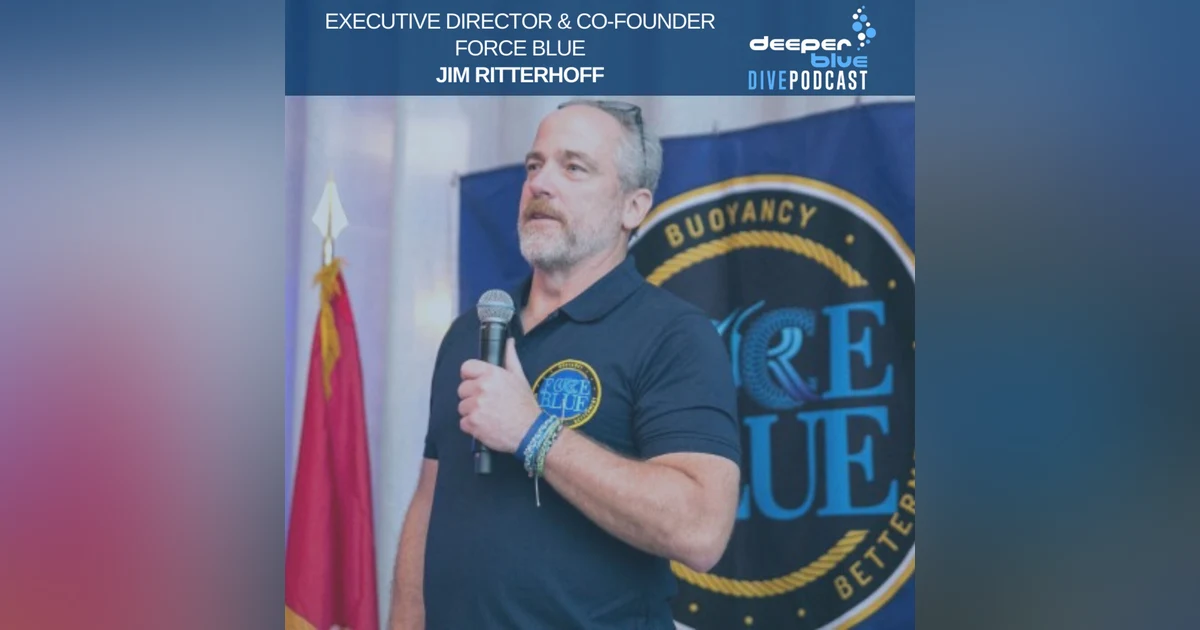
- Then co-host Mehgan Heany-Grier speaks with Jim Ritterhoff, executive director and co-founder of Force Blue - a nonprofit organization that provides a new mission for former combat divers and Special Operations veterans: healing endangered coral reefs. Jim shares in this episode an epic dive off Florida that involved veteran seals, scientists and the T-Rex of all pillar coral.
- We then hear a top tip from world renowned Go Freediving and RAID Instructor Trainer Emma Farrell on why sleeping underwater ain't so crazy after all.
- And then finally we hear another listener-submitted Best Dive Ever from Sara who takes us on dive with her at a UNESCO World Heritage site.
If you’d like to be notified when new shows air, please subscribe to the show in your favorite podcast app or head to deeperblue.com/podcast to signup for the newsletter.
Season 3 of the DeeperBlue Podcast is brought to you by Suunto. Finnish engineering pioneering adventure from mountain top to ocean floor since 1936.
Don't forget to give us ★★★★★, leave a review, and tell your friends about us - every share and like really makes a difference!
Season three of the Deeper Blue Podcast is brought to you by Sunto. Finnish engineering, piloting adventure from mountaintop to ocean floor since 1936. Sunto. Welcome to the Deeper Blue Podcast. Your weekly guide to everything that is happening around the world underwater. My name is Jason, and I'm producer of the Deeper Blue Podcast, the podcast for DeeperBlue.com, the world's most popular diving website. Every week, the Deeper Blue Podcast covers everything that is happening in the scuba, free diving, dive travel, and ocean advocacy world. So join us as we explore the deeper blue. Okay, we're rolling. I'll start it off because Stephen was just taking a sip of wine. Welcome to the Deeper Blue Podcast.
SPEAKER_03Yeah, sorry, Jason. Hey everyone. Welcome to the Deep Blue Podcast. I may point out it is it is late at night when I'm gorging this, so I am allowed to have some form of adult beverage.
SPEAKER_07Yes, you are. Welcome back, everyone. We thought when we were coming to do this show that it was gonna be a very slow week of news. Specifically because I couldn't find any stories about megamans with some sort of underwater dungeon.
SPEAKER_03The tabloids have had a hard time, right? So that's the that's basically what it is. I get it, Jason.
SPEAKER_07So we're gonna start off today. We're gonna go to Ireland.
SPEAKER_03Well, let's let's be careful here because it's Northern Irelands, not Republic of Irelands. You know, you can get into a lot of trouble here. This report is that there's an investigation underway following reports that scuba divers have removed artifacts from a Spanish Armada shipwreck, the Girona.
SPEAKER_07La Girona.
SPEAKER_03Apologies to all Spanish-speaking people on uh listening to this podcast. I do apologize. A patrol boat had been taking regular inspections of the dive site and so on, they'd uh spotted that these divers were diving and taking uh stuff off the wrecks. And it the reason we I want to talk about this is wreck diving is something that's fairly specialist, not everyone does it. And when you do your first wreck, you might be tempted to go and take something as a little souvenir, especially military wrecks in particular. These are things are protected.
SPEAKER_07Right. So once they did this, they it prompted them to actually bring more enforcement out to the area, and so now they're doing more regular patrols of the same thing.
SPEAKER_03Take any pictures, leave any bubbles.
SPEAKER_07Next story actually go takes us to Cyprus, spanning the globe with world underwater news. Now, originally I said this was a boring story, and then Steven said, Stephen highlighted my lack of knowledge around this underwater sculptor because Cyprus has opened a new underwater sculpture forest created by eco-artist Jason Declare Taylor, who I didn't know about before this.
SPEAKER_03Declare's amazing artist. So he does all these different sculptures underwater, and he's done stuff over in the Canary Islands. He's got two or three other installations, and it's actually quite an event. People go specifically to go and see these things, and he does like there's one of sort of sculptures where he's got people walking underwater in these sort of stone sculptures. Now, of course, the thing is that they grow over time, so it's not just having the sculptures, it's all this wildlife and stuff goes, and he and improves things. So he has launched a new one. And I think the great thing is that at the moment they look for like very bare trees underwater. And you can imagine as time goes by and flora and fauna underwater decide to make them their home, it will become quite an impressive thing.
SPEAKER_07Yeah, that's actually pretty cool. It does feel like uh you're going through the temples of Cambodia where the banyan trees are crushing up through the temples, and so that's very cool. So, okay, so that's in Cyprus.
SPEAKER_03Should we jet around the world? This one you need to take a plane to do different places.
SPEAKER_07Jetting around the world to Florida and Italy.
SPEAKER_03This isn't the Venetian in Las Vegas, just to let you know. It's uh it's it's real Italy. So this is great. So uh Parallelens, Great Friends of DeeperBlue.com. They're awesome, awesome little dive camera, which I have totally unashamed to say that I own several of them. And now I'm able to rent because these things cost several hundreds dollars and euros to buy. You actually don't need to buy them now. You can select dive shops in Florida and in Italy for 25 or 25 euros a day, you can actually rent a camera.
SPEAKER_07That's very cool. I would love to actually have a high quality camera with me underwater without having to do the thousands of dollars you would normally need for a camera and a housing.
SPEAKER_03These things are great, they look like little torches. Diving specific GoPro is the best best way for people to understand it. And they also have a little free app that you can download the videos directly onto. So you rent it, you can like put your own little SD card in, or you can download straight to the app.
SPEAKER_07Very cool. So I'm gonna jump ahead to some other gear news from the Swift Transmitter. Shearwater Research has launched a new Swift transmitter, which basically is a wireless way to connect your dive computer to all your equipment, correct?
SPEAKER_03Doesn't sound very exciting apart from the fact that Shearwater do some amazing dive computers. So the Terek and the Perdicks are generally regarded as some of the best dive computers out there. They also have a really cool one. The one that's really cool is they have a heads-up display. So you have a little one that you can dive. It's mainly for tech divers, and it sits right in front of your eye, and you can see all your details just in front of your eyes. Called the HUD. Um the HUD.
SPEAKER_07HUD's amazing.
SPEAKER_03And HUD is heads-up display, which is a military term in fighter aircraft. So imagine that you have a little heads-up display. I don't, unfortunately. Unfortunately, Shearwater have never sent me one. But you know, hey, Shearwater. Uh I'll send you Jason's address and you can go and send it to him. Going to flops them in the water.
SPEAKER_07I'd love one. I'd love one. Well, that's great. Okay, on to Patty has now created a job board, uh, which is fantastic. Basically, it's a centralized way for people to understand where there are jobs available in the world. So we're pulling this off deeperblue.com, the world's largest website for dive, the dive community. Um, but the interesting photo that you chose here for this announcement is that it's a dive boat with a downed aircraft in the background. I'm not sure I understand what that's all about. There's a 747 in the water.
SPEAKER_03The downed aircraft is in Bahrain and they sank a 747 as an artificial rig. The reason your photo's there is it's got a big paddy sign that says diving is fun. So um so I'll I'll raise it with a news editor. Uh so John, if you're listening to this, expect a very strongly worded letter.
SPEAKER_07This is a great test, actually. Don't mention to him that we mentioned this on the show and just see if he talks to you about it. We'll know if he's listening to the podcast or not. Absolutely.
SPEAKER_03Photos on this aside, the job board, really great. It's one of the most difficult things, particularly as a professional trying to find jobs around the world.
SPEAKER_07Yeah, that's great. That's great. And the last bit of news taking us around the world is to the Caribbean Cup free diving competition, which started today. Is that correct?
SPEAKER_03It started on the 11th. So the 11th is when we're recording this. So this is a little sneaky insight inside insight into what happens behind the scenes on uh the podcast. So yes, it starts on the 11th and actually it finishes on the 18th, which is the day after the episode this episode airs. It is starting, it's a ninth edition. This competition is fantastic. It is a world-class competition. It was started nine years ago. It is something that all the top athletes go to, usually after Vertical Blue. It's the next competition that is held. And I think one of the really key things here is that for those who don't know free diving very well, there's several different federations that certify records. I mean, if you're a boxing fan, it's a bit of the same thing as boxing, which is you know, you can be a world record holder under different organisations. And the two main ones are uh CMAS and ADA, and for the first time ever, a couple of years ago, before they didn't have the last year's one because of COVID, but uh 2019, they actually had judges from both federations there. So you can set records under either federation, which is great for the athletes, but they also judge you on your absolute deepest depth, so you get prizes and all this thing. So it's it's really cool. That's cool. The the resort they have there, the Mayen Princess Beach and Dive Resort.
SPEAKER_07That's the Mayan for you Americans out there.
SPEAKER_03Okay. Mayan Princess Beach and Dive Resorts. Absolutely stunning. Walk off the beach, uh dive platforms 50, 60 meters off coast, big deep drops, beautiful beach, beautiful resorts, absolutely fantastic. So I'm super jealous that they're all there.
SPEAKER_07And then I think, of course, next week we'll have any kind of records or news of note to come from the Caribbean Cup we will have in next week's show. Moving on now to a globe spanning story, which is the reason I bring this up is we've had a number of people approach us to do interviews with people around this. There's a new report coming out talking about underwater mining and how it's threatening Mexican waters. Deep sea mining is a new thing coming online across the world. There's a number of companies that are doing it, and there is some controversy around deep sea mining. The idea of deep sea mining is that you don't have to do strip mining or mountaintop removal for some of the minerals and deposits that people try to get. But there are environmental impacts around deep sea mining. And so there's a report that just came out talking about how deep sea mining disrupts a number of things, including fishing habitats, polluting the water column, and interfering with ocean seafood chain. This is from Green Priest and the World Wildlife Fund. Of course, we live in a world that requires minerals and deposits, and we have to extract them somehow. Whether this is the way to go forward or not is of a is a question, but there are a number of well-funded organizations that are trying to get this started. And essentially what they do is they go down and look for deep-sea nodules, is what they call them. There is dredging involved, there is digging involved for some of these things, and so that's why there are issues around this, and it is something that has yet to be resolved.
SPEAKER_03And so when you say nodules, I I somehow think they're little zits on the bottom of the stuff. That's right, you pop them. Yeah, you pop them. So um a lot more research needs to be done around this sort of stuff. And uh, you know, the thing that just worries me a little bit about this is is this just a hidden way of doing similar sorts of damage in mining, yeah, strip mining stuff? Is it just because it's under the sea, you don't get to see it, so you know, outside, out of mine type thing.
SPEAKER_07That's one of the concerns around it. But they also talk about the fact that cobalt, copper, lithium, nickel, and a lot of these rare earth metals, which some ways are super hard to extract or come from contested regions of the world, for example, the Congo, where there's all kinds of human rights abuses, this is a way to address those kind of issues and just how environmentally friendly is up for debate, and it's an ongoing question, but we just wanted to highlight it. Which brings us to the IPCC report that came out this week that everyone has been talking, that's been in news across the world, and how basically says that we have passed a tipping point and within 30 years, for the next 30 years, it's gonna be a rough time. The reason I wanted to highlight this story is because if we're actually in that place, there are some dramatic impacts that are gonna happen to the ocean, and which is the place that anyone listens to this show really cares about, and really that it's a way that all of us need to pay attention to and do something about. One of the things that they talked about is how coral bleaching can be expected to a much greater degree, which of course is a huge bummer. Huge, huge bummer because you could have mass die-offs, and also the idea of the underwater currents somehow switching or stopping, which is super dangerous, and we're actually fairly close to in some ways. And again, I know it's a bummer of a news to talk about, but the reason I bring it up is because we, as people who are connected to the ocean, this is one way that we in particular can get involved to work to help mitigate these consequences.
SPEAKER_03As you say, Jason, it's been a massive news item across the world, and this is a massive issue globally. And we need to take ownership as ocean ambassadors and take ownership of helping the planet. And it doesn't matter, every single little thing you do is really important, doesn't matter how small it is, you need to be getting on board, doing it, and and also using your voice as a consumer because every single voice is important.
SPEAKER_07I think the reason I I wanted to highlight this story is because for my entire life when we heard about environmental problems, there was always a story of like, and if we don't change things now, we may be in more trouble in the future. What this report really highlights is we are kind of in that place where the trouble is here now. We see it across the world with the extreme weather happening all over the place. For me, it's shifting from a place that things that you talk about and support changes to actually now we all have to kind of get involved. We are all in this together, and particularly for us, being connected to the ocean, that's the one place where I can really throw myself into it. And so that's why I wanted to highlight the impact they think this will have on the ocean.
SPEAKER_03So that takes us to our last story. Right, which is super fun. Super fun. After depressing us, Jason now has a story that is more in his wheelhouse.
SPEAKER_07It was hard to find fun stories this week, but I think this one's pretty badass. So Jeep is coming out with an all-electric Jeep soon. And because it doesn't require an internal combustion engine and requires only an electrical engine, they've actually designed one that can drive underwater. So this is getting me closer and closer to the place where I don't actually have to move my body in any way. I can actually now go scuba diving simply by sitting in a chair. We're getting closer and closer to the place where I can just be taken around as an inert being and to all the things that I love to do. So the thing that I love about it is the Jeep Wrangler Extreme Recon can right now go up to 12 feet underwater. And the kind of the badass thing is there's some videos on YouTube that show like a guy driving the Jeep with some scuba tanks strapped in the back and he just drives right in the water. Now, I'm fully cognizant of the fact that I'll be driving over Manta Rays as I read this and Davis. But I just thought pretty much. But you're looking cool whilst you do it, Jason.
SPEAKER_03So, you know, it's uh, you know, this is this is literally off the back of the last news item, you've literally proven that you you you shouldn't be trusted.
SPEAKER_07That's right, I agree. I mean, this Jeep looks pretty badass. It has super knobby tires, like the the top is ripped off, so it's an open-air jeep. I picture myself ripping my shirt off in my six-pack showing. Now, I I admittedly I have I have a little ways to go before I'm at six-pack, but the idea is there, like if I can get one of these jeeps in the future, maybe I'll work towards that. Drive it into the ocean.
SPEAKER_03Well, I I I mean, Jason, if you're worried about driving over manta rays and stuff, then if you do go and drive in backwards, you don't have to look at what things you're running over as you're going in. Joking aside, you know, I love Jeeps. Second car, I knew you had a Jeep, but a Jeep Wrangler in the UK is a little uh impractical. There's not much covering when it actually does rain in in dusty desert places like where you live. Jason, it's uh it's more practical. Yeah, to be able to drive underwater, talk about feeling like James Bonds.
SPEAKER_07That's exactly what it is. And so that's why I wanted to bring up because it's just like something fun to do. Okay. Well, that's the news for the week. That's it.
SPEAKER_03It is. So remember, you can catch all the diving ocean and travel news that you want on deeperblue.com. And let's get on with the rest of the show.
SPEAKER_07Here's another way where you can find out if John is actually listening to the show because I want him to get more of these mega mansions electric jeep stories on deeper blue.com. So let's see if he's actually listening. Thanks everyone. We'll see you next week. Okay. Cheers. Cheers, everyone.
SPEAKER_02You're listening to the world's only weekly podcast for scuba diving, free diving, dive travel, and ocean advocacy. I'm Hugh Pearson, a wildlife filmmaker who specializes in working at sea. And this is the Deeper Blue Podcast.
SPEAKER_06Hey divers, it's Megan here, Deeper Blue co-host. Coming up, I'm speaking with Jim Ritterhoff, the executive director and co-founder of Force Blue, a nonprofit organization that unites our special operations veterans with the world of marine conservation. Today, Jim shares with us about a dive in some rough seas off the Florida Keys that involved veteran SEALs, scientists, and the T-Rex of all pillar coral.
SPEAKER_01My name is Jim Ritterhoff, and I am the executive director and co-founder of Force Blue. Force Blue is the only nonprofit organization in the world that retrains and redeploys former special operations veterans. So all military-trained combat divers, Navy SEALs, recon Marines, Air Force Power Rescue Men, all special operations veterans to work alongside scientists and environmentalists on marine conservation missions.
SPEAKER_06How did you get into diving?
SPEAKER_01I grew up in Pennsylvania, not a coastal community, didn't have a lot of interaction with the oceans, but I went to graduate school in Syracuse, New York. And I was up in New York, and I was just kind of climbing the walls because it was just Syracuse in the winter. And my girlfriend at the time, who is now my wife, her family was very big into scuba diving. Her father, in fact, was one of the first uh British sub aqua instructors in the United States, and he had been diving with Jacques Cousin and Jan Koblik, and you know, was really good friends with all these sort of legendary divers. And she saw how bored I was and was like, why don't you go get certified? So I walked into a dive shop, and the first thing I saw, the guy who ran the shop was a guy named Chair Hollenbeck, who actually, as I found out later, dove on the Atosha and was pretty famous in the dive world. He had a 30-foot poster of himself mixing martinis at depth with a dive rig on, you know, on the bottom of the ocean floor mixing martinis. And I thought, wow, this is the sport for me. It was a lot harder to get certified back then. It was at an eight-week process, and I did it, and I did my first open water dive in Lake George, New York, in March. So it was just miserable, but I was hooked.
SPEAKER_06Can you tell us more about Force Blue? What is the ultimate mission of Force Blue and what are you all working on now?
SPEAKER_01You know, the idea grew out of something very personal. A dear friend of mine, who's one of the co-founders, a guy named Rudy Reyes, was a recon Marine veteran, had done you know, seven, eight tours of duty in Iraq and Afghanistan, and was struggling, was really suffering in his transition out of the military. You know, he had substance abuse issues, he had problems with his marriage, just all the kind of things that when you you learn about the difficulty a lot of our veterans are having, they're all you know, very similar experiences. I took him diving down to the Cayman Islands with me on a dive trip and uh our third co-founder, Keith Sam, who ran a resort down there. The three of us spent a week diving together and we saw what it did for Rudy. So the real idea, the genesis of Force Blue is to try to really answer two very different problems. One is obviously the rapidly declining health of our oceans and our marine resources. The other issue, however, is the difficulty that way too many of our servicemen and women, particularly those who've experienced combat, are having in their transition back to civilian life. You know, these really high-speed operators like Rudy, we can't put them in a cubicle when they get done with their service and say, you know, thank you. Now get on with your life. So we were like, wow, if we could build an organization that could address both of these seemingly unrelated problems with one kind of mission-focused program, we might really have something. We have these highly skilled individuals, they're an amazing workforce. Why put that on a shelf? Why not pair them with scientists in the marine scientific community who need the workforce to help the environmental side, but at the same time use those missions to kind of create a sense of team and a sense of service and purpose that these service people want. That's who they are. And then the kind of secret sauce of the whole thing is you know, in this hyperpartisan political climate that we live in right now, when half the world doesn't want to hear about science or doesn't want to listen to another climate change scientist talk about what's happening to our environment, they'll listen to Navy SEALs, recon Marines, because these guys are their heroes. And I think the magic comes from the ability to bring the two very different groups together. You know, we always joke we don't care if you get on the boat from the left side or the right side, we're all in the same boat. So all of a sudden, you have this sort of spoonful of sugar that helps the medicine go down about what's happening to the environment, the courtesy of these incredible heroes who've dedicated their life to serving our country. You don't have to be an environmentalist to appreciate what we're doing because there's a very human story there as well. And if these service people are willing to dedicate themselves to fighting this fight to protect our oceans and marine resources, people are going to take notice.
SPEAKER_06Jim, in all of your time diving and experiences underwater, is there one particular dive that really just stands out for you that's kind of a touchstone?
SPEAKER_01Yeah, you know, there was a story that happened when we first started Force Blue. We had just finished our first training deployment in the Cayman Islands. We spent two weeks with unbelievable cadre of scientists and environmentalists, and our first six special operations guys. And as fate would have it, Hurricane Irma hit Florida and devastated the Keys. And someone at NOAA reached out to us and explained to us that there had been a lot of damage to the coral reefs in the Keys. Massive amounts of coral had been ripped up and scattered all over the place. So we went down there for a week. It was our first in the field operation to help triage and reattach some of the broken pieces of coral that had been ripped off the reef. We spent a week cementing back on little pieces, fragments of coral all over the you know, I mean it was devastating. And then toward the end of the deployment, we were out off the Key West, and I'll never forget the no advisor who was with us, who was leading the expedition, sort of turned around and said, you know, I don't know, but there might be something about 50 yards off the back of the boat over there that you guys may want to take a look at. I can't, he's been very sort of fun in his his playfulness. Like, I'm not going to tell you to go swim over there. But what it was was an 800-pound pillar coral, of which there are very few left in Florida. This thing is a dinosaur. It's a like I said, 800 pounds, centuries old, that had been ripped off the reef and was now laying in about 28 sand, suffocating, and would be dead in a matter of days, probably. Noah's protocols do not allow them to lift anything that big. We at the time didn't have any protocols. So, of course, our guys are like, let's go. So they jumped in with a bunch of lift bags and went over to recon this pillar coral colony. Meanwhile, I'm on the boat mixing the cement. And then now you have to remember this is like October, November in the Keys. It's about six foot C's. I mean, we are rocking and rolling, tossing. I had to jump in and swim the cement out to the guys. The great part of it is the guys got three lift bags on this thing, pulled it off the bottom, dragged it back onto the reef, got the cement, put it all down, cemented it back on. And I'm not kidding, a minute after this thing was back up on the reef, the color came back. And fish started coming in. And we got back on the boat, and our guys are just, I mean, these guys have lifted predator drones off the ocean floor. I mean, it wasn't a big deal for them, it was pretty easy work in terms of the work they do goes. But we all were on the boat, and the scientists and the dive masters who were with us were like ash and white. Do you know what you guys just did? Our guys were like, sorry, what did we do? They're like, No, you don't understand. You just saved the T-Rex. One of the dive masters was literally crying. He's like, I bring people to this dive site all the time, and that was the reason that that had a name. The Pillar Core colony's name was actually Archie. They're like, you saved Archie. The reason why it's so important for me and it means so much for me is that I saw the look in their eyes when they realized what they were capable of doing. When you give them back a way to use their training and to be what they were again in another realm, which is just the most badass, best, hardest working, most mission-driven people on the planet. When you give them an opportunity and you give them the space to be that again, it is, you know, it's like a rebirth. That's very, very empowering and that that, you know, that changes lives.
SPEAKER_00Hi, I'm King of Phillips, journalist and ocean advocate, and you are listening to the best 30 minutes about diving, the deeper blue podcast. This is Emma Farrell of Freedive UK, and this is Emma's top tip.
SPEAKER_04So my top tip for free divers is to always act before you free dive as if you are falling asleep. Because people think that when you prepare for a free dive, it's this really active process where you have to do this as a tidal breathing technique and get all kind of do this funny yogurt, whatever. But actually, the safest way you can prepare for a free dive is just to be so chill that you could literally fall asleep. Your body is completely relaxed, your breathing is really soft and gentle, it's just a tidal volume. And I have had students fall asleep as they prepare to hold their breath. And to me, that is job done. Wow, that's an amazing top tip. Thank you. I love it.
SPEAKER_07And Rudy and Sunto. The Deeper Blue Podcast is brought to you by Sunto.
SPEAKER_03Massive thanks to Cinto for sponsoring the season of the podcast. So today we want to have a a quick chat about the Cinto app. So the Cinto app is pretty cool. Yeah, everyone's going to have an app these days, right? Even Deeper Blue's got an app. I don't know if we can add that in just as well. We can do it anywhere we want. So you're wearing this fine piece of finish engineering from Cinto on your wrist. And you can now download stuff onto an app and it gets all your detail. So it's not just about dive stuff, depth, time, where you were, those sorts of things, but you can share it with other people. So other people on the app, but you can also share it to social media.
SPEAKER_07I spoke about this last season. I don't record any of my dives in my dialogue. I don't do any of that. I have no idea really where I've dived. I couldn't tell you really into the dive sites. And one of the things I like about this app is that it can actually record all that for you. It can do your profile, key facts like temperature, depth, dive time. You can add pictures. I'm sure there's a location thing to it as well. And as they say, sharing this on social media makes your friends jealous, which is, yeah, that's okay. I think more of the point is that the less I have to do in my life, the better I feel. So if I can go diving and just have this computer do everything for me, I can literally just get on board and have a beer. I think that then that sounds so much more interesting to me than actually writing in my dive log.
SPEAKER_03So I haven't written a dive log in about 25 years. So uh Yeah, yeah, yeah. No. So I I usually these days is just to tell how much weight I need to use because I've often put on weight since my last dive. So uh I need to figure out how much weight I need to wear again. Right. Yeah, the Central app can help with that sort of stuff. And I think the other cool thing, the Centro app also tracks things like your smartwatch activity. So if you go jogging or running, if you do other activities in sports, it's not just about like the D5 is a smartwatch, it's not just a dive computer.
SPEAKER_07Actually, the deeper thing that this thing's about to me, which I really like, is that Cunto is actually thinking ahead. I like that. I think that they're forward thinking around this kind of stuff. We are gone past the days of like giant metal tanks with an analog gauge on the side. Now we actually have these people that are actually building these things that are moving, pushing it forward, which I really appreciate. I really like that. And honestly, there's a lot of people that could say that the more information you have, the worse things are. But I would say it's particularly around a technical sport like diving, free diving, regular diving, more information a lot of times is better. Having some records of all this kind of stuff, that's good. I applaud them for that. And if you allow me to post to Facebook and Instagram as a bonus and make all my friends jealous, then that's it, that's an added bonus. So thank you.
SPEAKER_06Finally, in every episode, we share a story from you, the dive community, where we ask you to tell us about your best dive ever.
SPEAKER_05Hi, my name is Sarah and I live in East Sussex. Best ever dive. That is a hard one, but let's dive into 2018. I was on a liverboard with friends to the Pacific Ocean from Mexico. It took 28 hours of rough sailing to the Ravilla Agaguido Islands. This is a World UNESCO Heritage Site, of which there are four volcanic islands, three can be dived. The island I want to talk about is San Benedicto, and the dive site is El Boiler. I had great expectations as I'd heard from other divers of incredible sightings of pelagics at these islands that did not disappoint. So let's dive in. The water was 24 C and the depth 31 metres. On immediate descent, we found white-tipped sharks lying on a huge flat shelf in the volcanic rock. There were too many to count, but they were spooked by us and swam out, circling around us, then came back to their resting place. I don't think they really liked us, but we like them. That was not it. Out of the blue, Pacific mantis arrived. Oh what? I can't remember how many, but so graceful and again incredibly friendly. And then a pot of common dolphins turned up. Wow. To see so many sharks on one dive, but to have dolphins and manta raised too is beyond belief. We felt so privileged. And also, were we on the series of blue planet? Because that is how it felt. There truly are some spectacular places to dive in this world. But as I always say, it doesn't matter where you dive, you never know what is going to turn up. Thank you for listening and happy diving when you can.
SPEAKER_06We'd love to hear about your best dive ever. So please head over to deeperblue.com slash best dive ever to share your story about your best dive ever.
SPEAKER_07Thanks for listening to the Deeper Blue Podcast. Find out more about all the stories you've heard, plus connect with the world's largest dive community at deeperblue.com. If you like what you heard, please share, like, and rate our show wherever you get your podcasts, as those shares and likes really make a difference. Thanks so much, and see you next week.